Report the month. Plan the year. Reports, variance with its own commentary and report books, then a full budget round: versions, spreads, forecasts and sign-off.
Short films on real screens. Start with the whole product in a minute, then pick the part you care about.
Report the month. Plan the year. Reports, variance with its own commentary and report books, then a full budget round: versions, spreads, forecasts and sign-off.
One finished report, reshaped on every beat. Each film shows one way to work a report without rebuilding it.
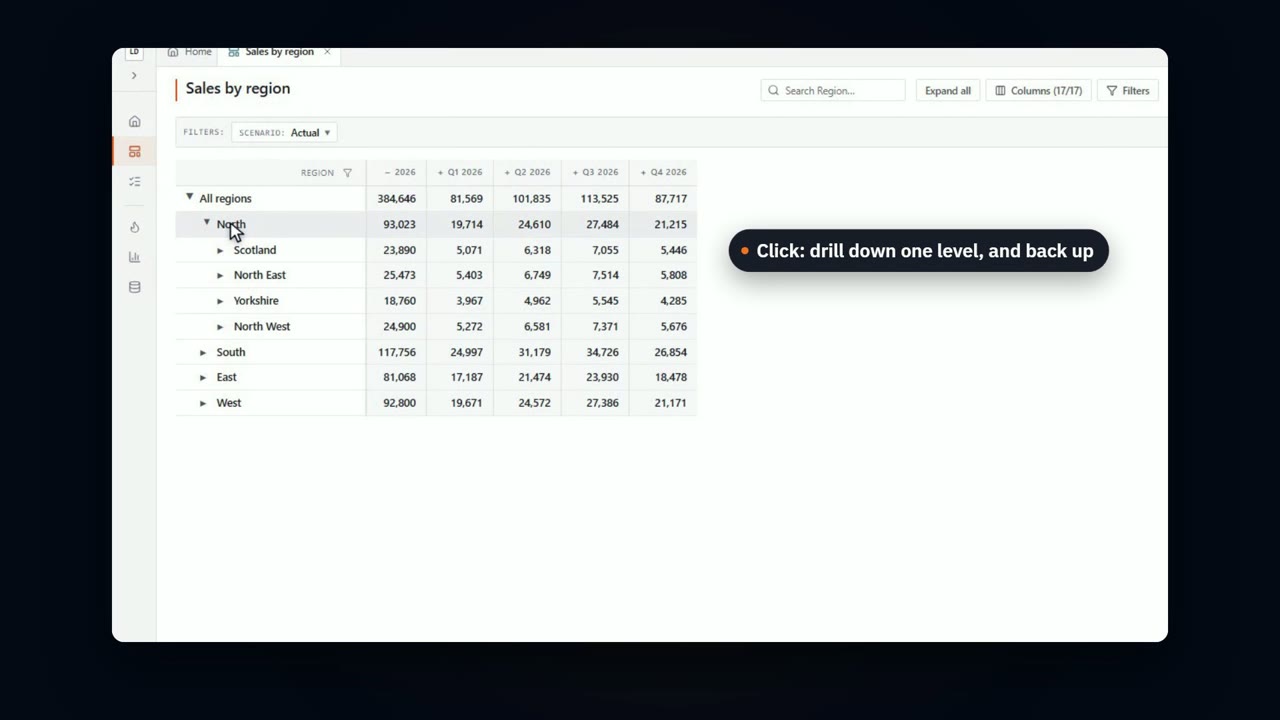
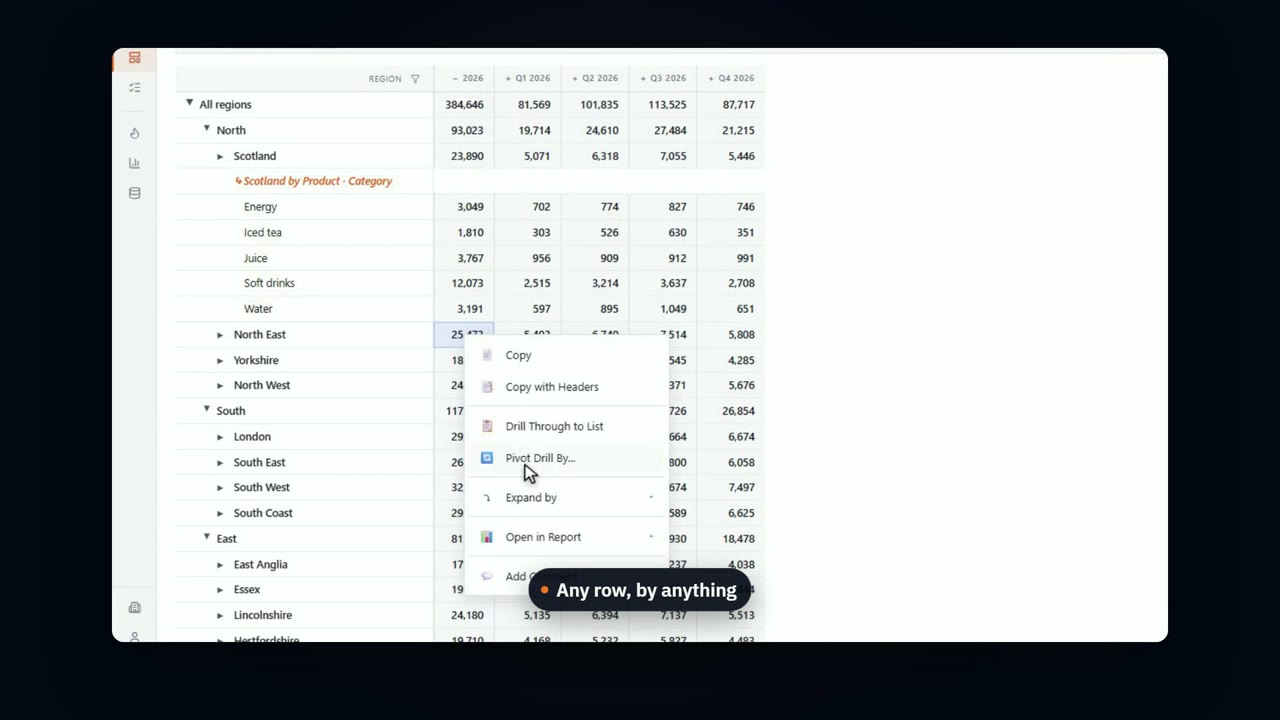
Down a region to the branch, across to the product, and back, on a production-sized report that reshapes as you go.
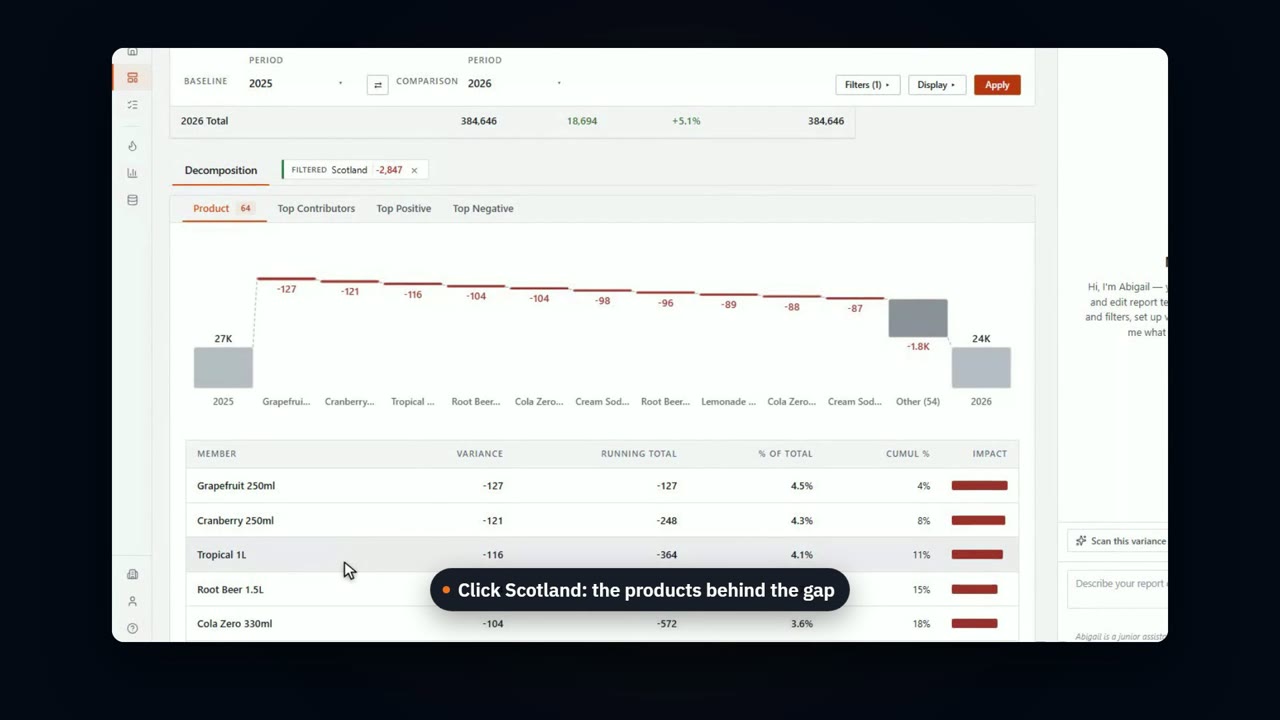
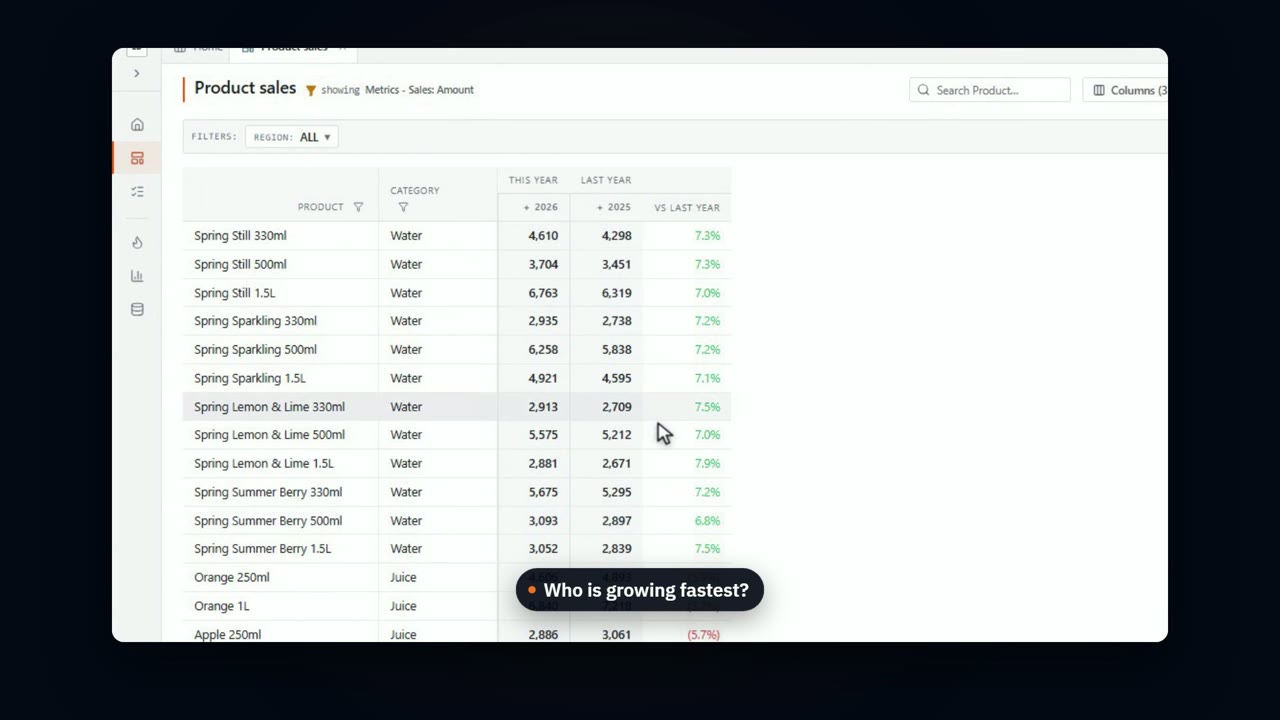
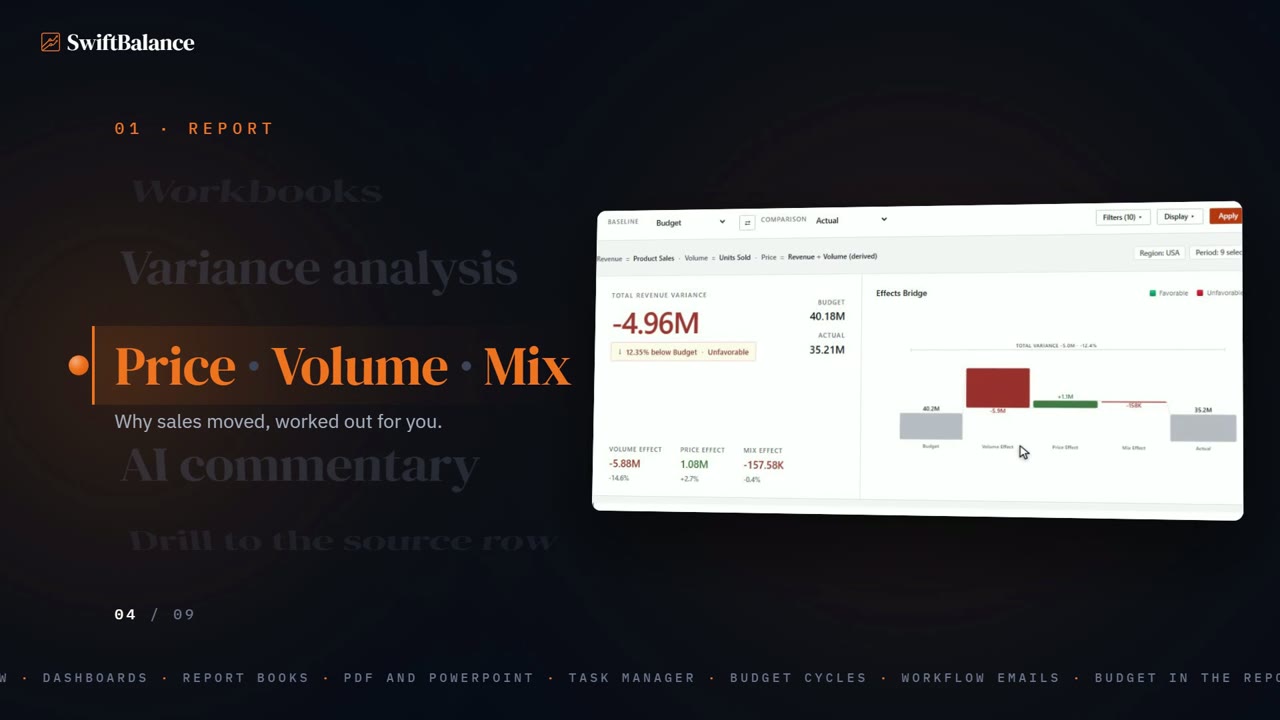
A column against last year, traffic lights on every line, then why it changed.
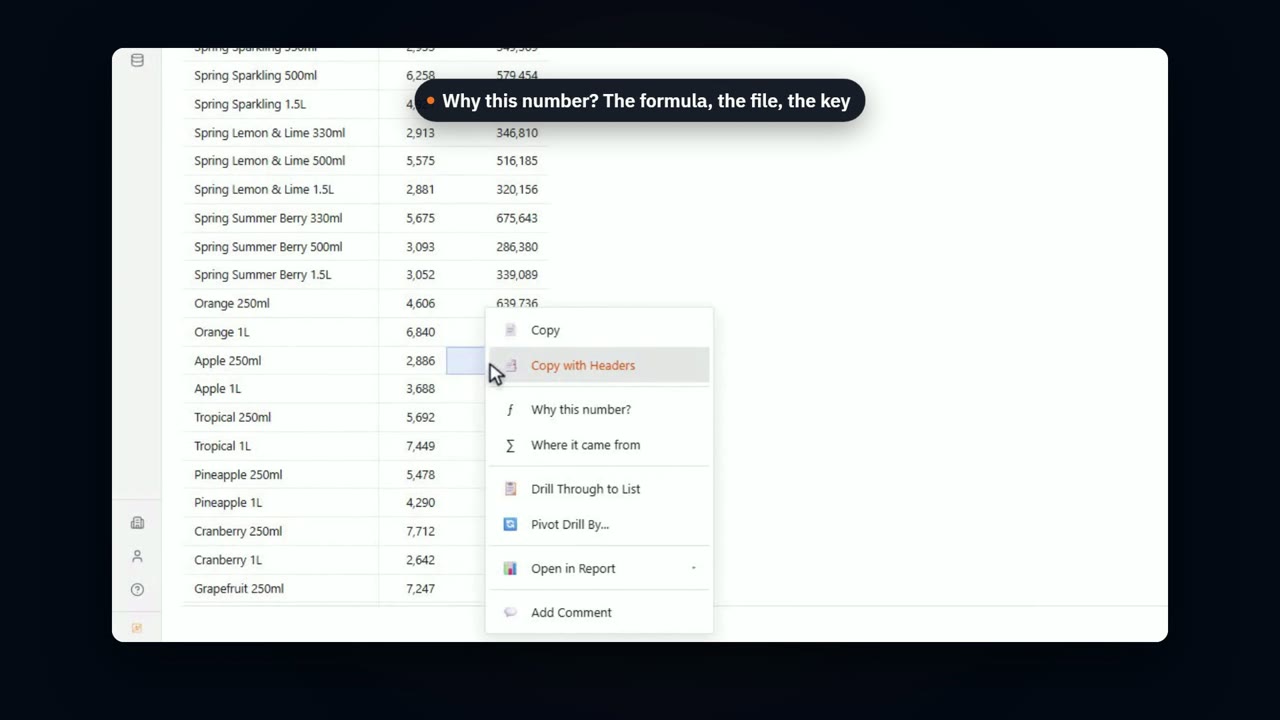
Build a calculated line with a lookup to a file, right in the report. Then ask why a number is what it is.
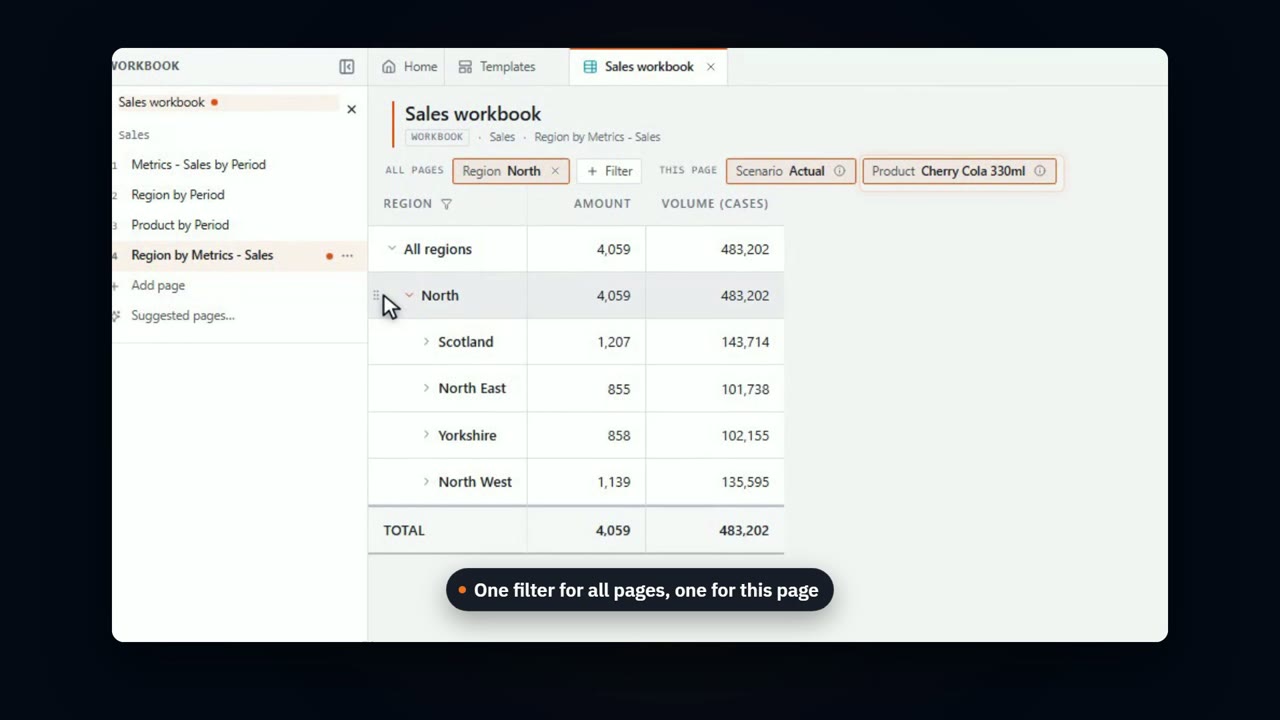
Several pages over one set of data. Filter them all at once, give each page its own, and drag from one page to the next.
Ask a question of the report in plain words, and the report answers it: sorted, filtered, found.
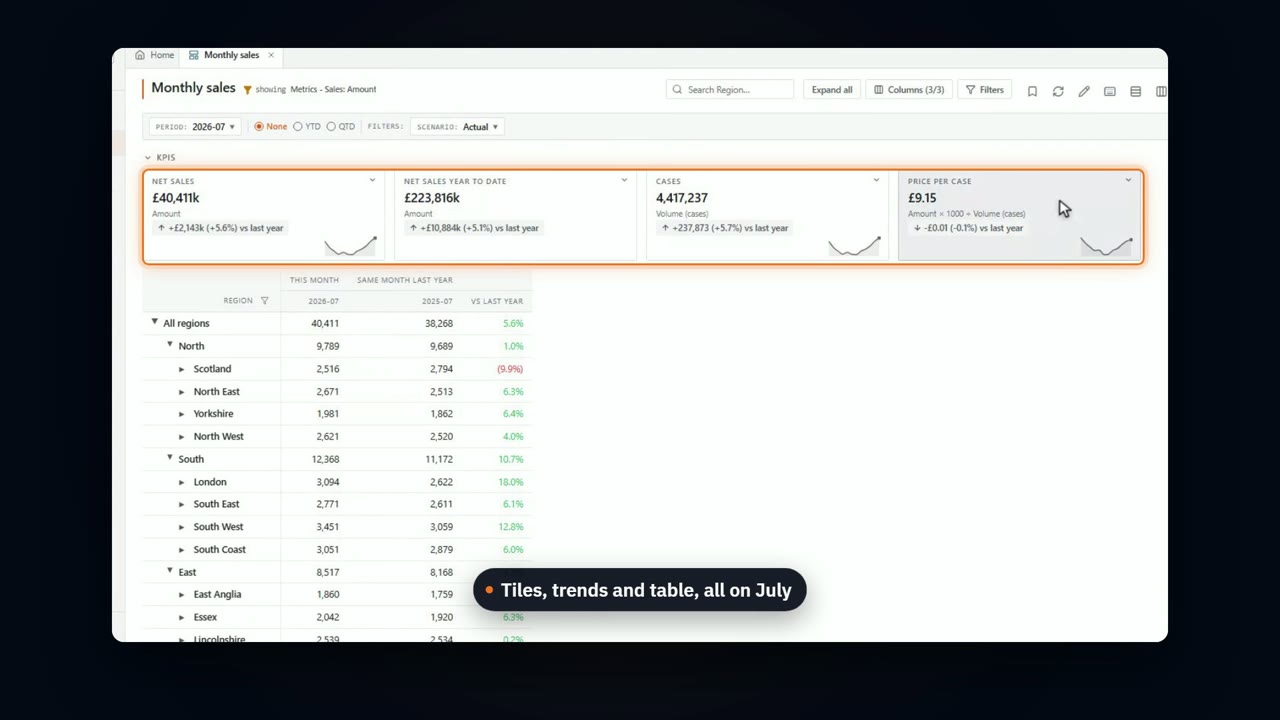
The month just closed, at a glance. Tiles, trends and table follow the month you pick.
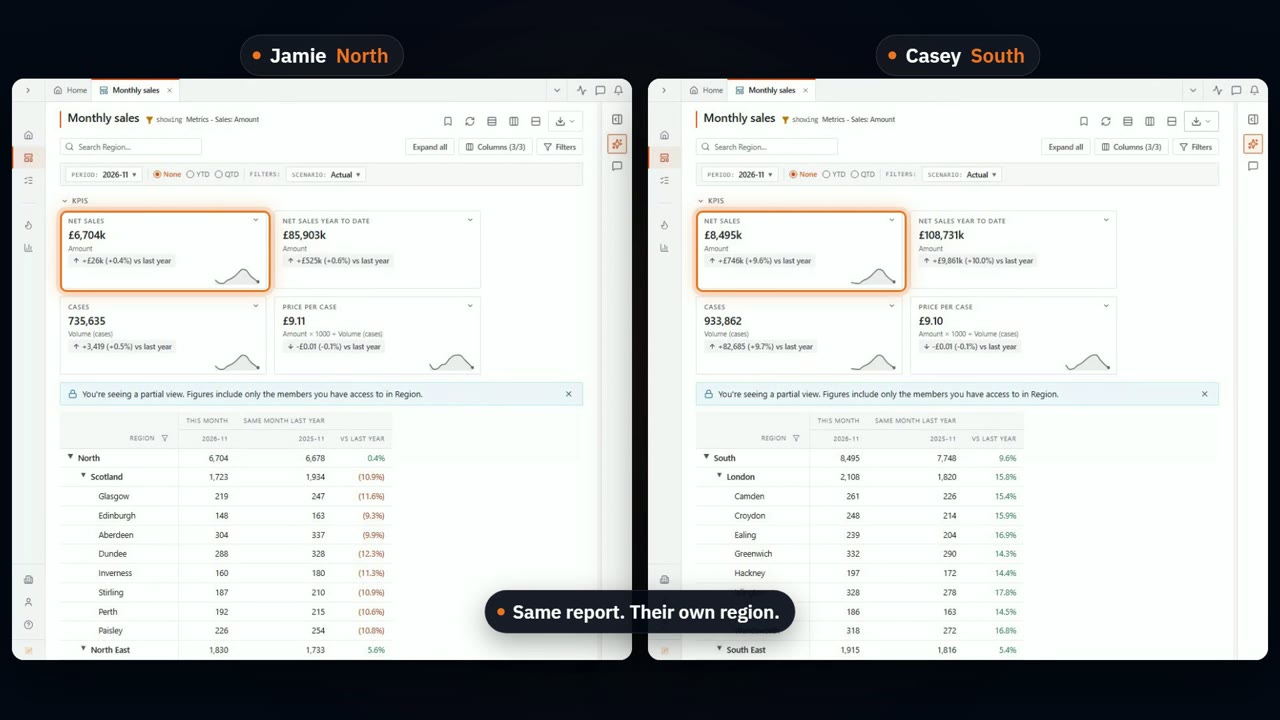
One report, shared with every regional manager. Each one opens it and sees only their own region.
A planning model that comes in parts, prebuilt. Each film snaps one part into place.
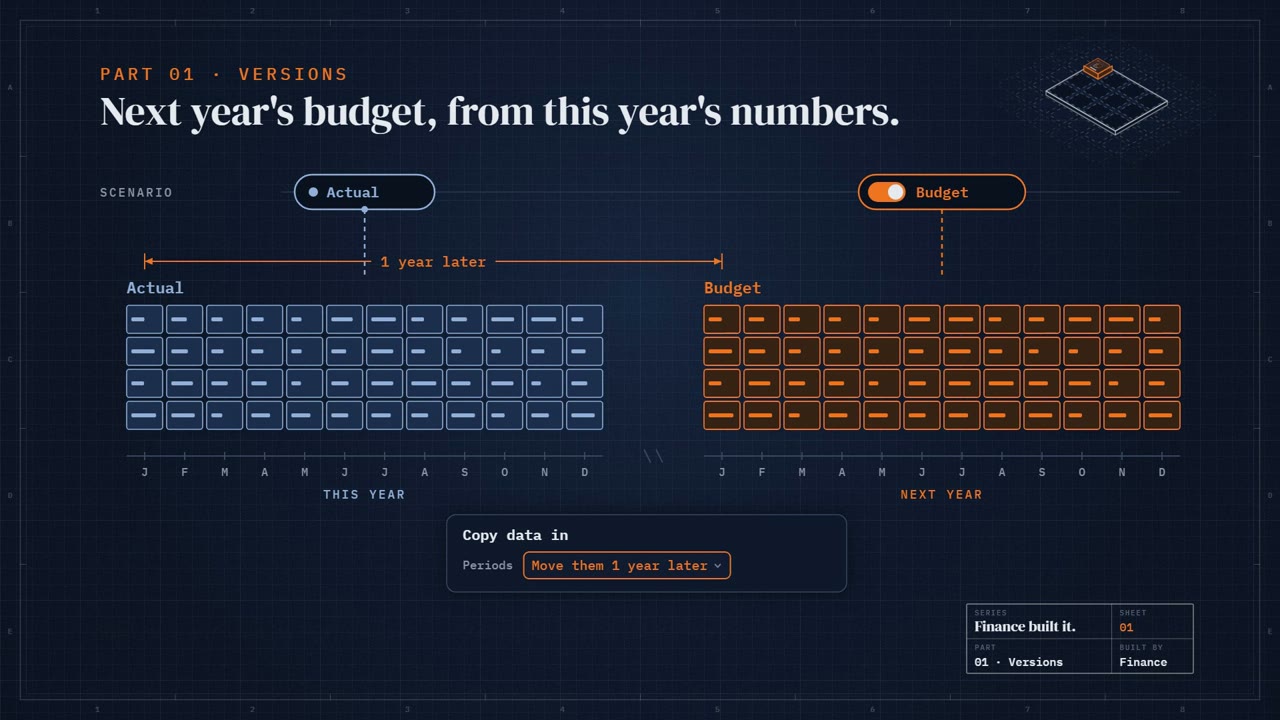
Next year's budget, from this year's numbers. Copy data into a new version, move the periods a year on, and lock what's final.
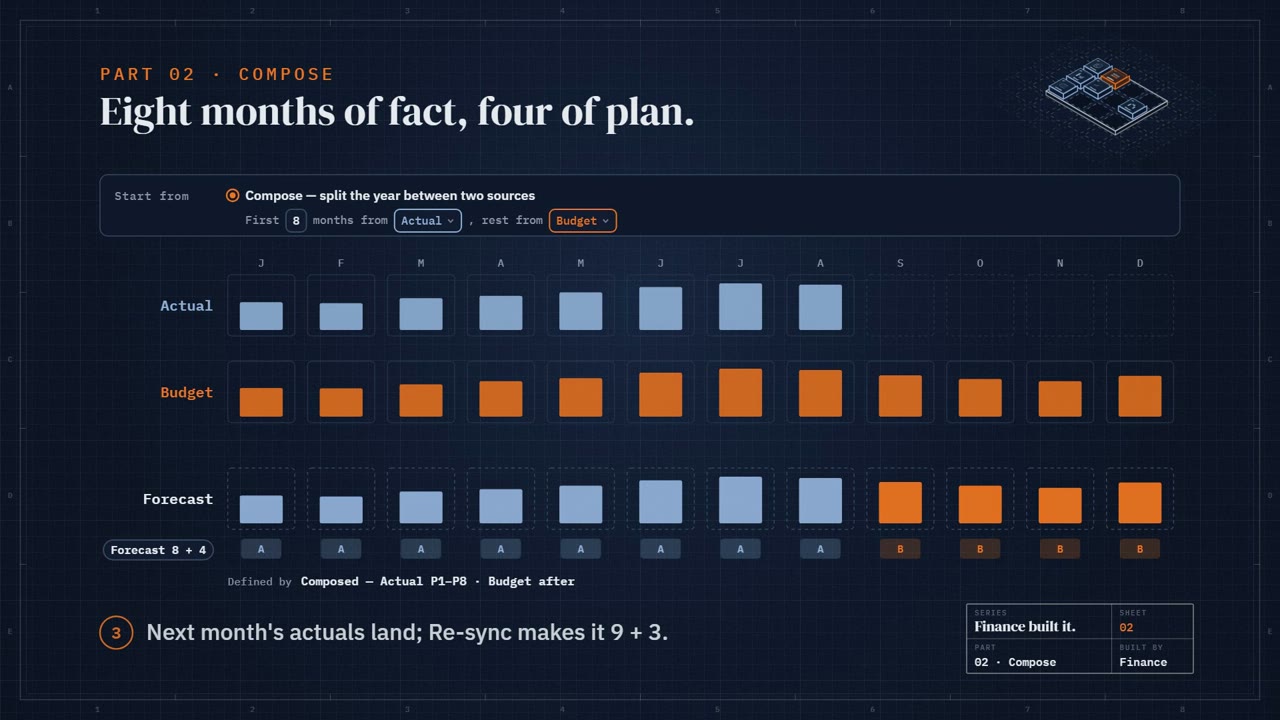
Eight months of fact, four of plan. Compose a version from two sources and split the year between them.
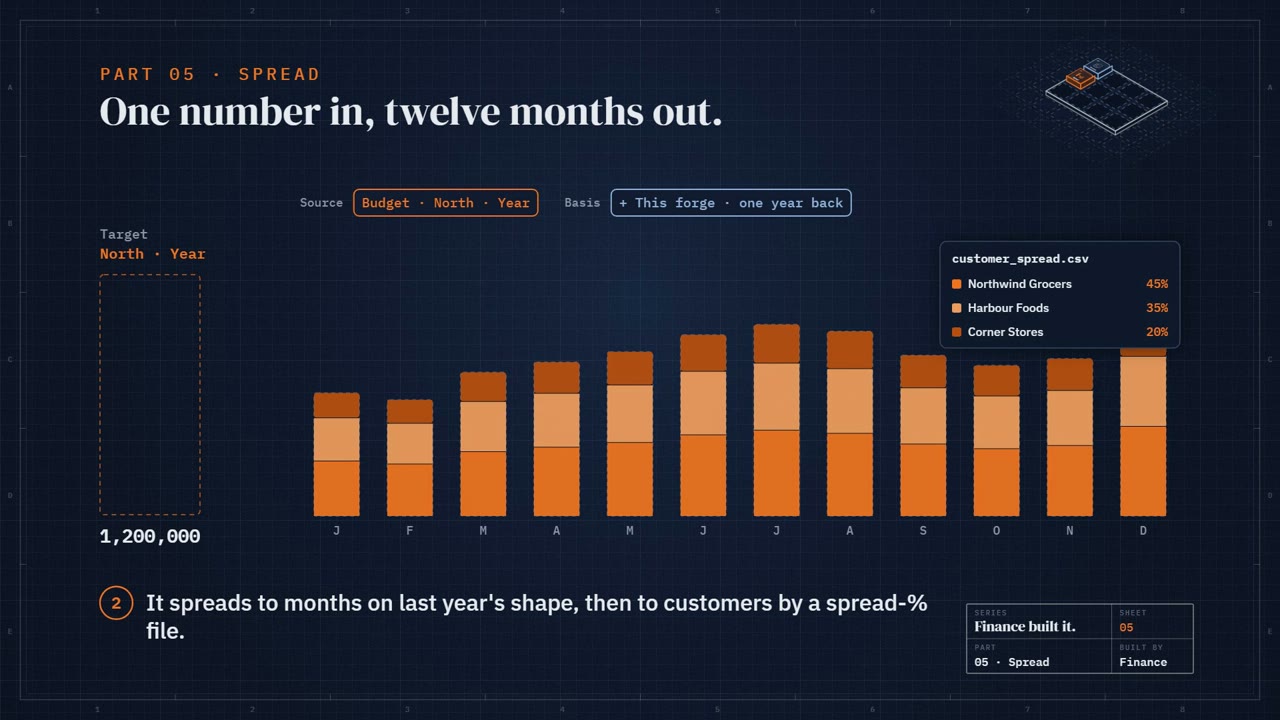
One number in, twelve months out. Spread a target across months and lines on the basis you choose.
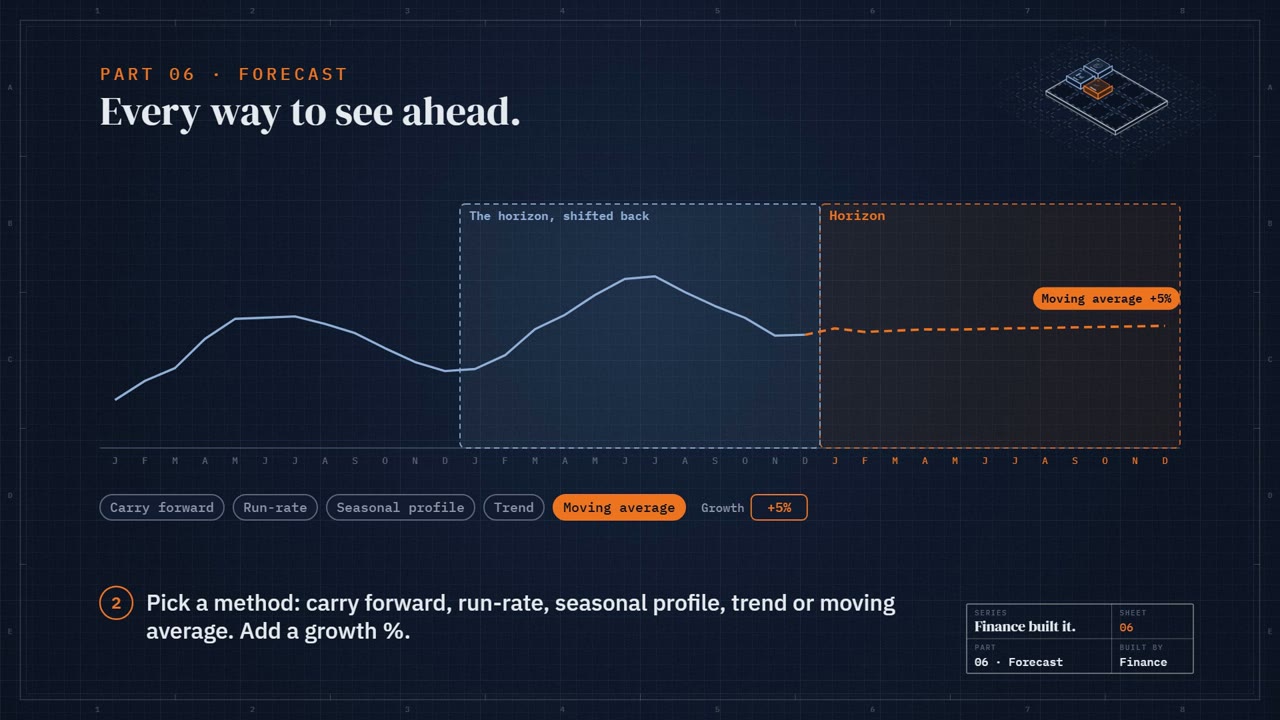
Every way to see ahead. Pick a horizon, a source and a method, and let rules choose the method line by line.
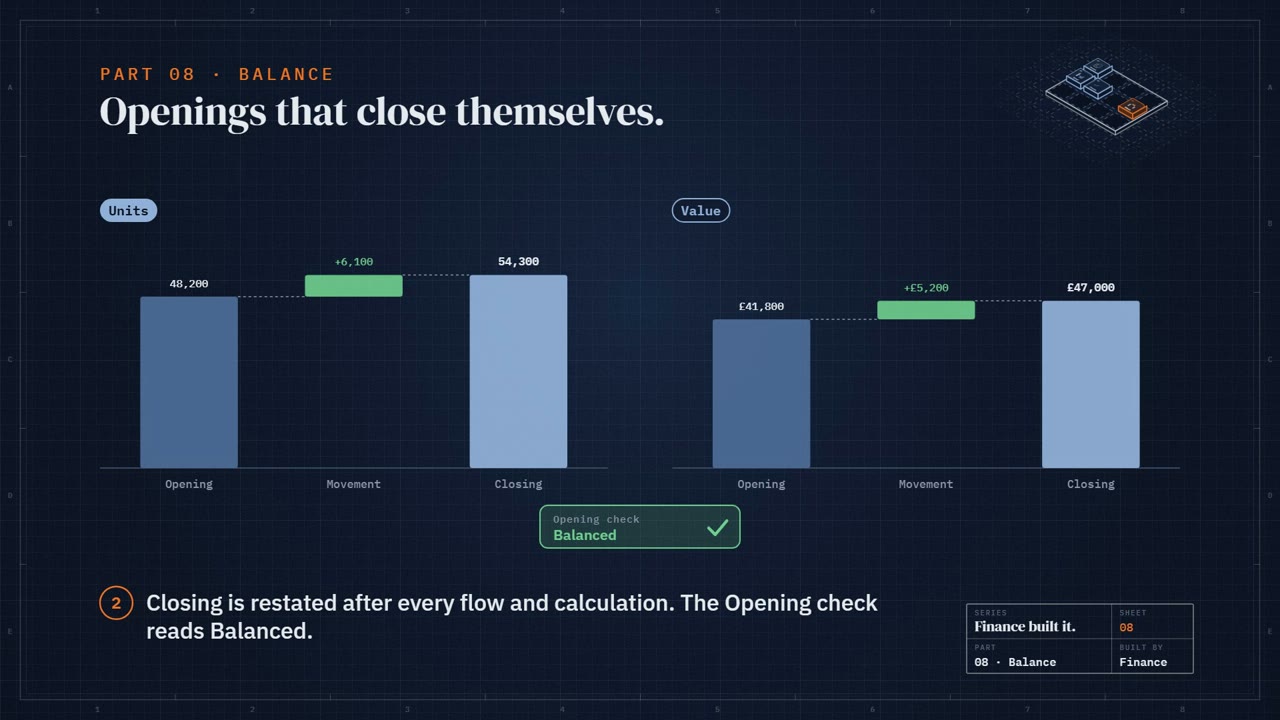
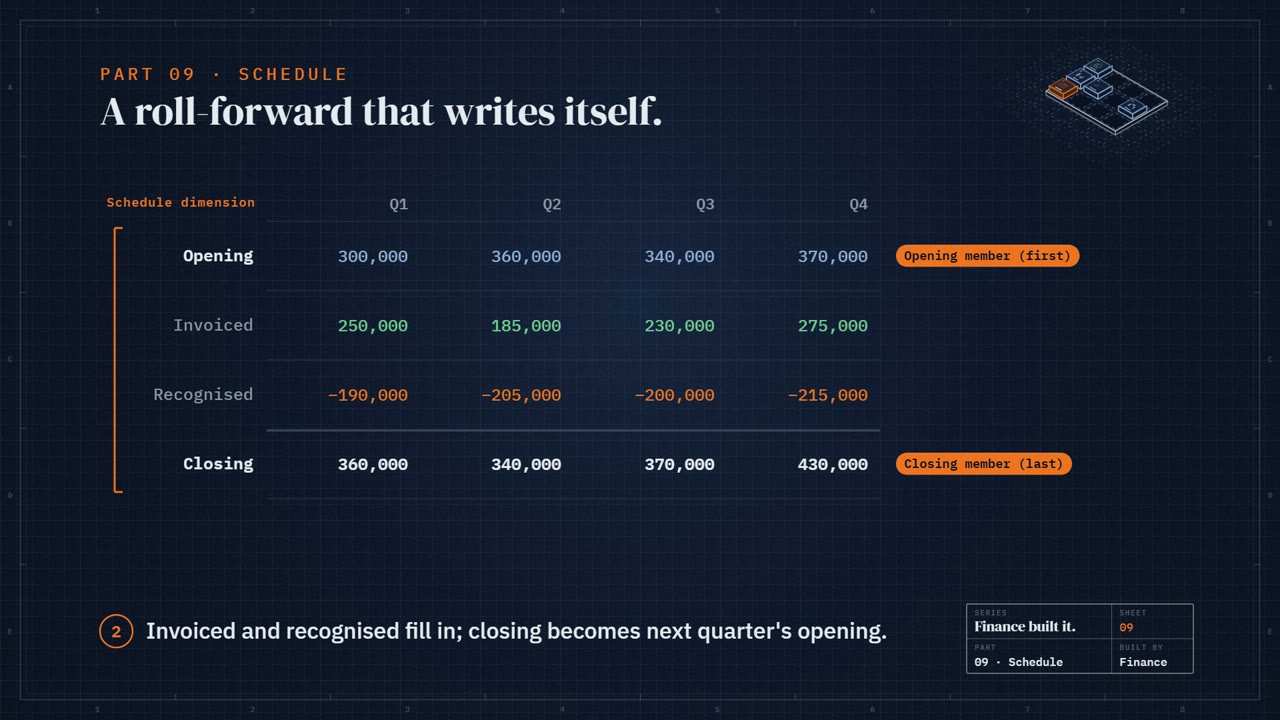
Openings that close themselves. Opening, movement and closing for every metric, carried from one month to the next.
Longer looks at one job, start to finish.
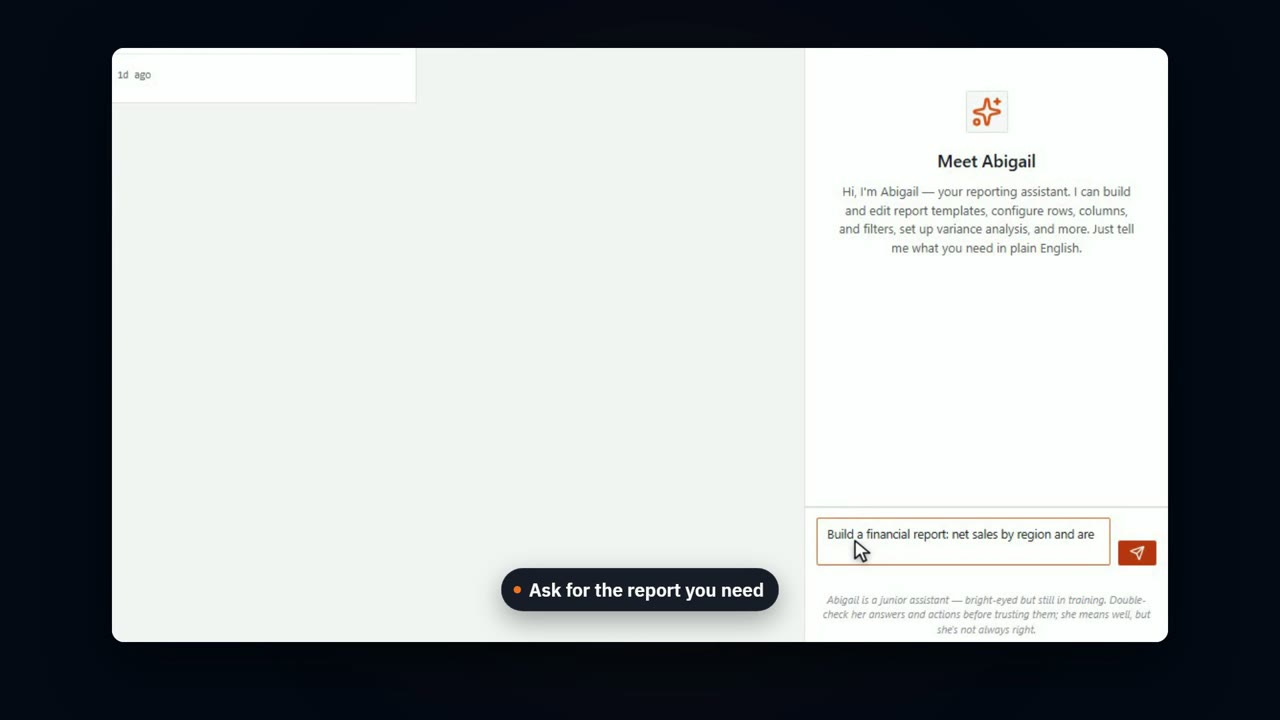
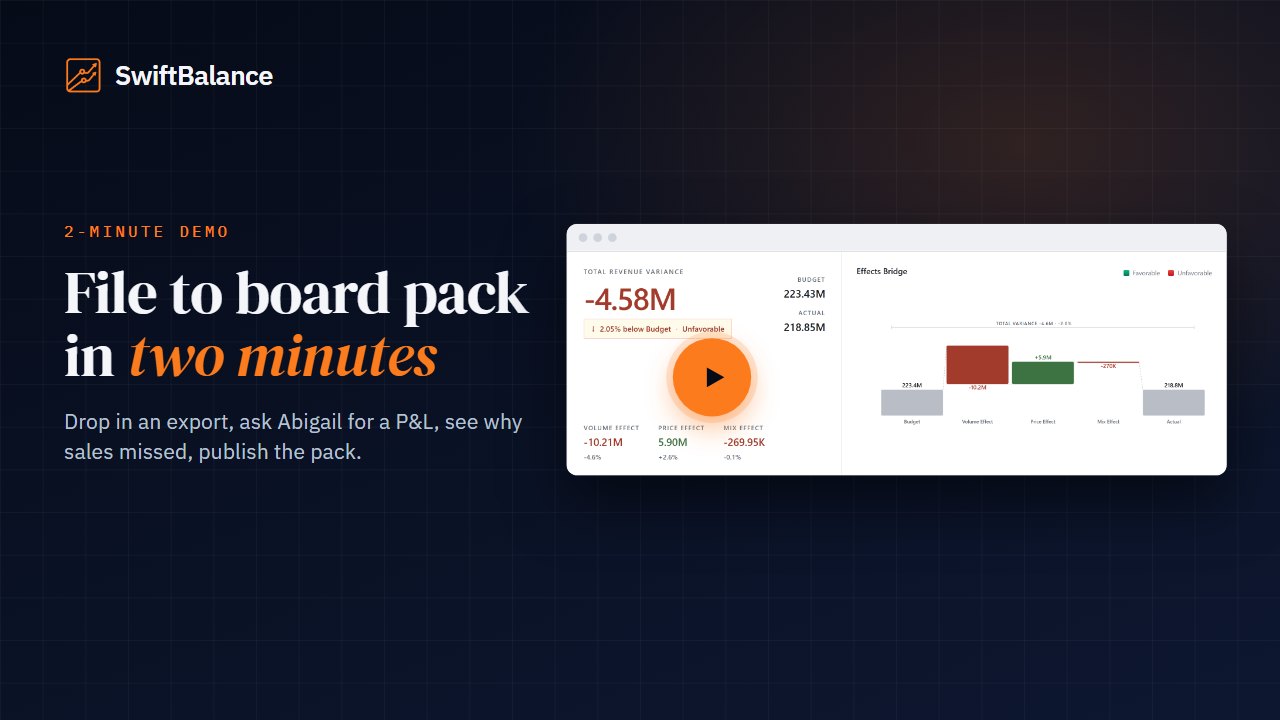
Drop in a management accounts export, build a forge, ask Abigail for a P&L, slice it by region, explain the sales miss, and publish a numbered PDF.