Load the exports you already have and model them once. Close the month with reports that explain every movement, then build next year's budget on the same numbers.
Report the month. Plan the year. Reports, variance with its own commentary and report books, then a full budget round: versions, spreads, forecasts and sign-off.
The reports and the plan read the same dimensions, the same hierarchies and the same actuals, so the budget and the month-end pack never disagree.

Financial reports, workbooks and dashboards you drill, break down and reshape live, with variance that says why each number moved.

Budgets and forecasts typed straight into the report, spread and allocated, with forecast methods per line and budget rounds your budget holders sign off.
Short films, one question each. Drill into a number, break it down, find the gap and see where it comes from.
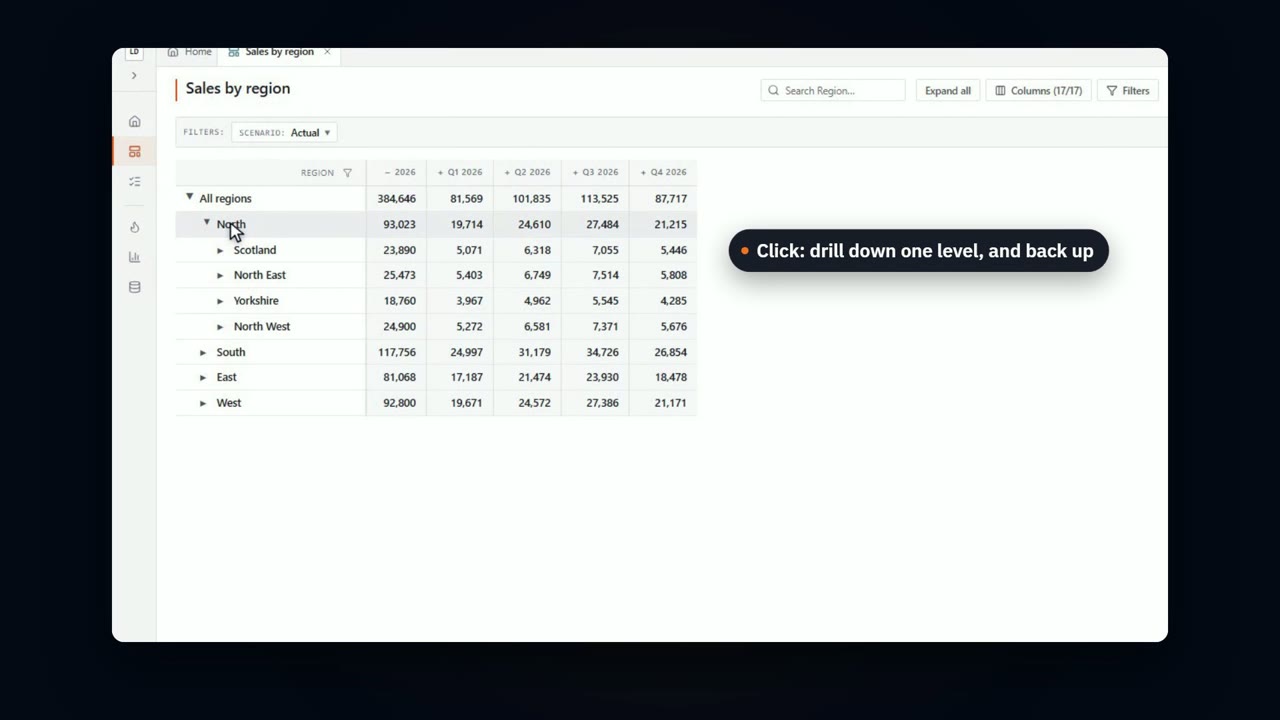
Dynamic drilling Down a region to the branch, across to the product, and back, on a production-sized report that reshapes as you go.
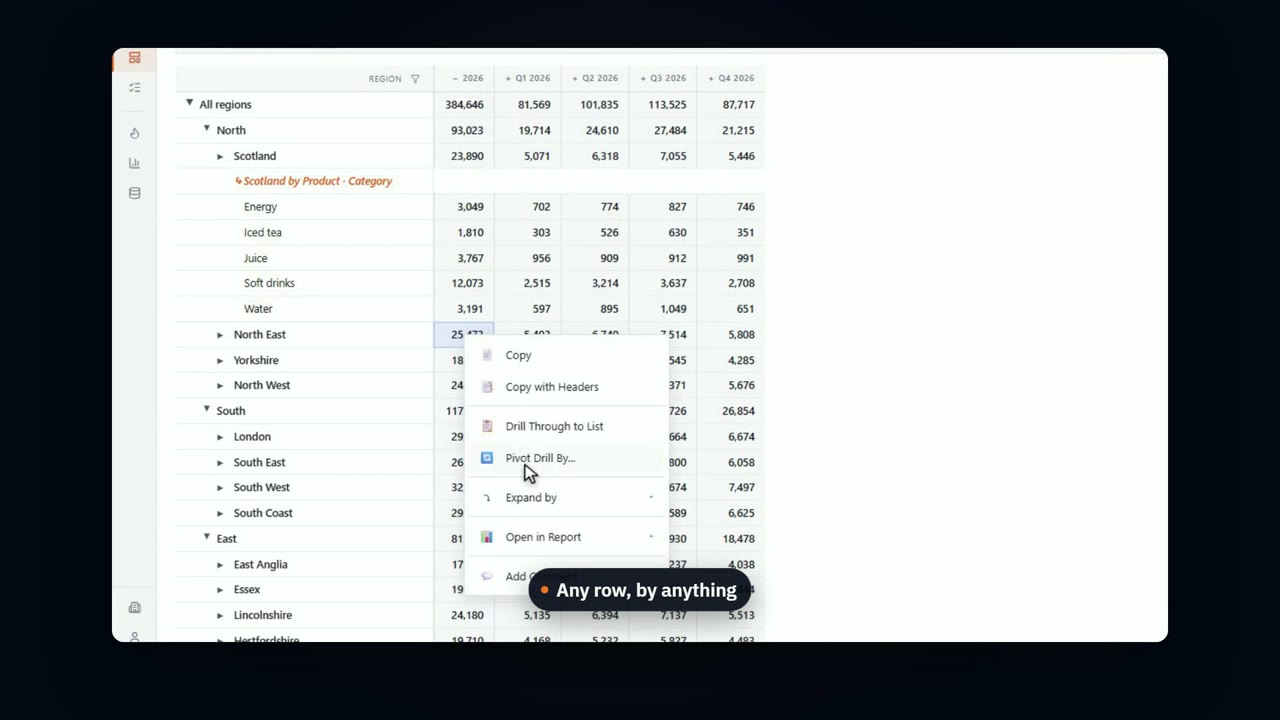
Break it down. Break any line down by any dimension, right inside the report.
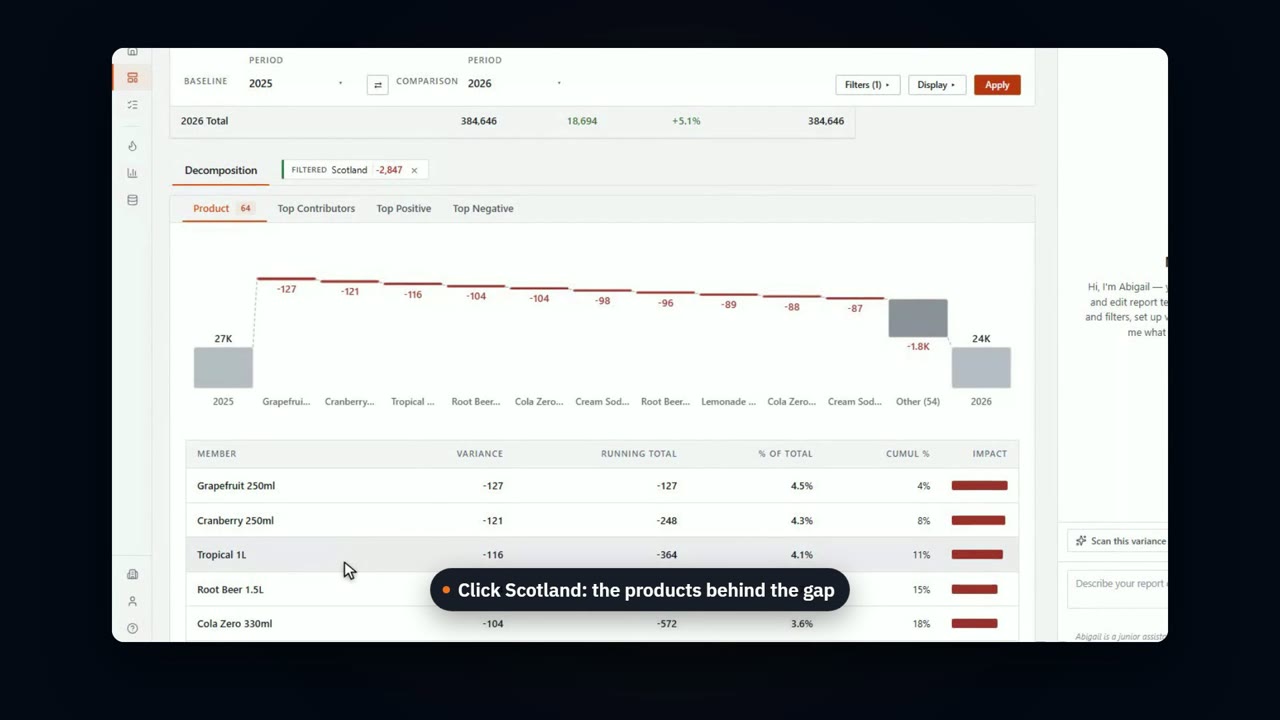
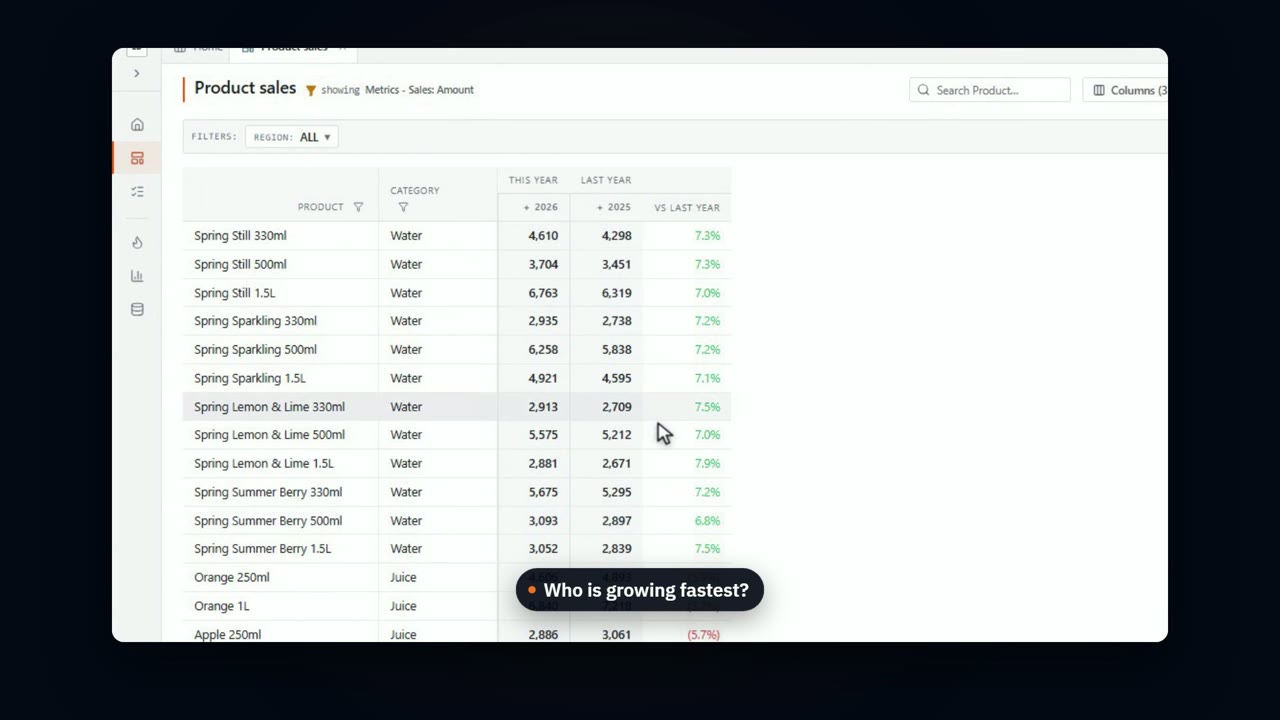
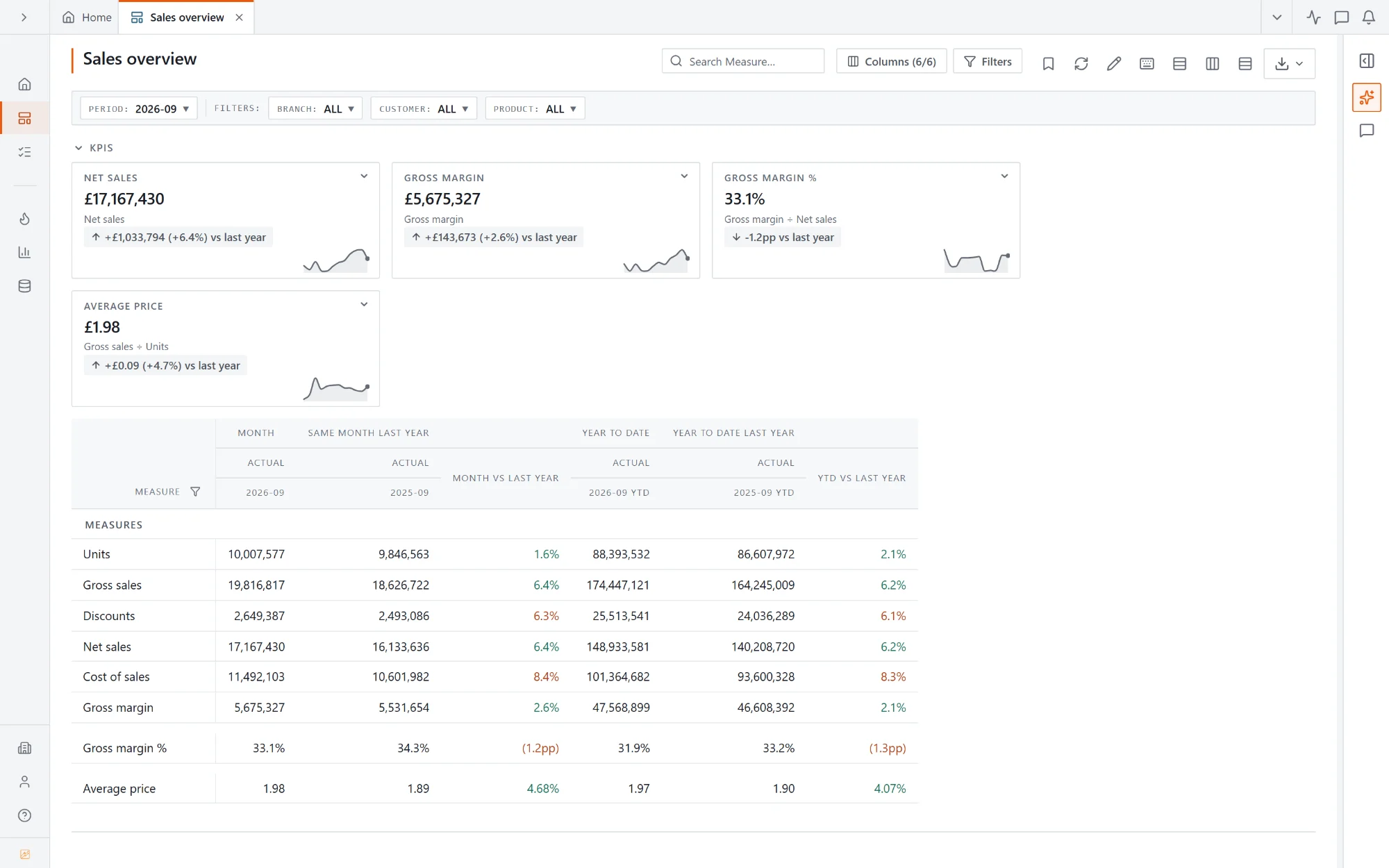
Where's the gap? A column against last year, traffic lights on every line, then why it changed.
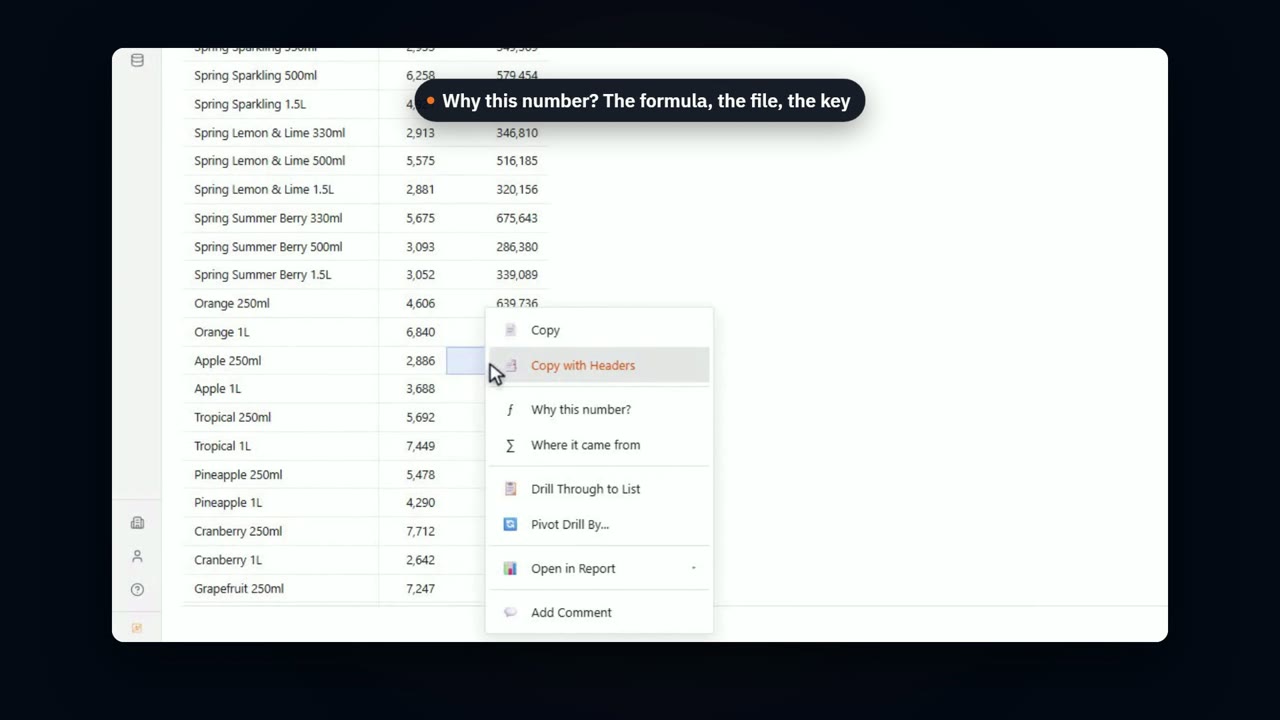
Where does it come from? Build a calculated line with a lookup to a file, right in the report. Then ask why a number is what it is.
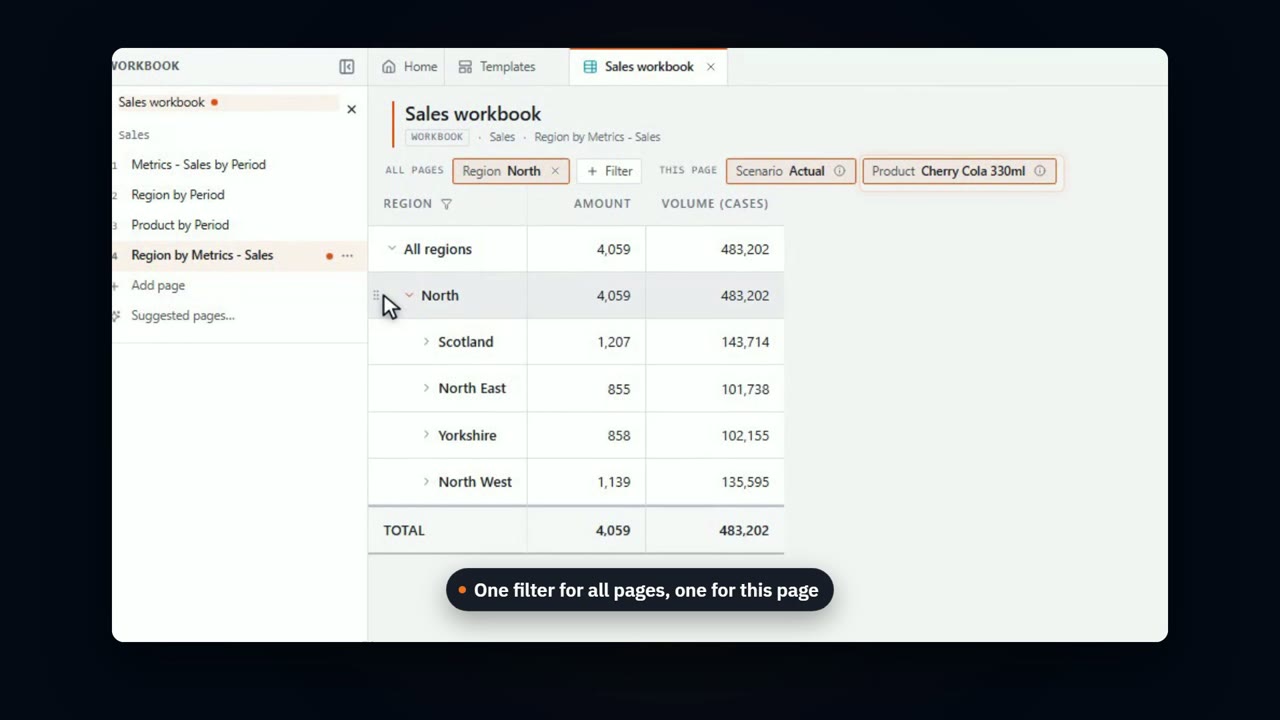
One workbook, many sheets. Several pages over one set of data. Filter them all at once, give each page its own, and drag from one page to the next.
Ask it anything. Ask a question of the report in plain words, and the report answers it: sorted, filtered, found.
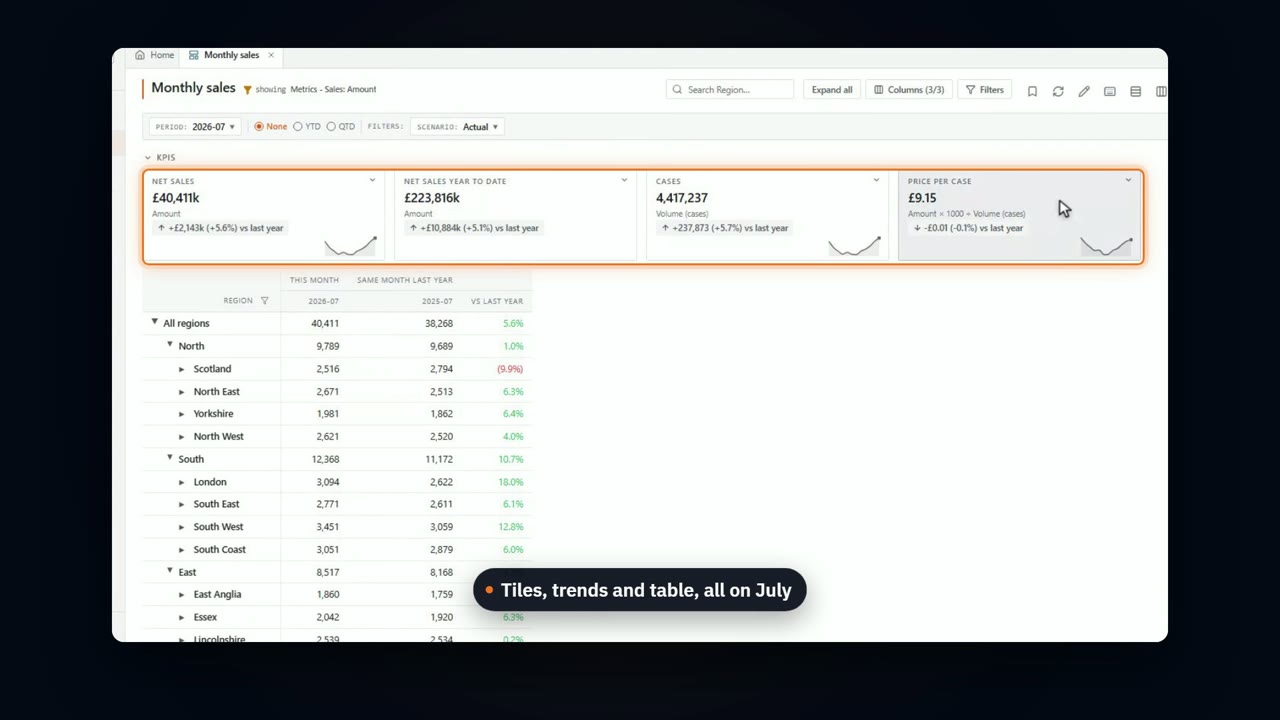
Pick a month. The month just closed, at a glance. Tiles, trends and table follow the month you pick.
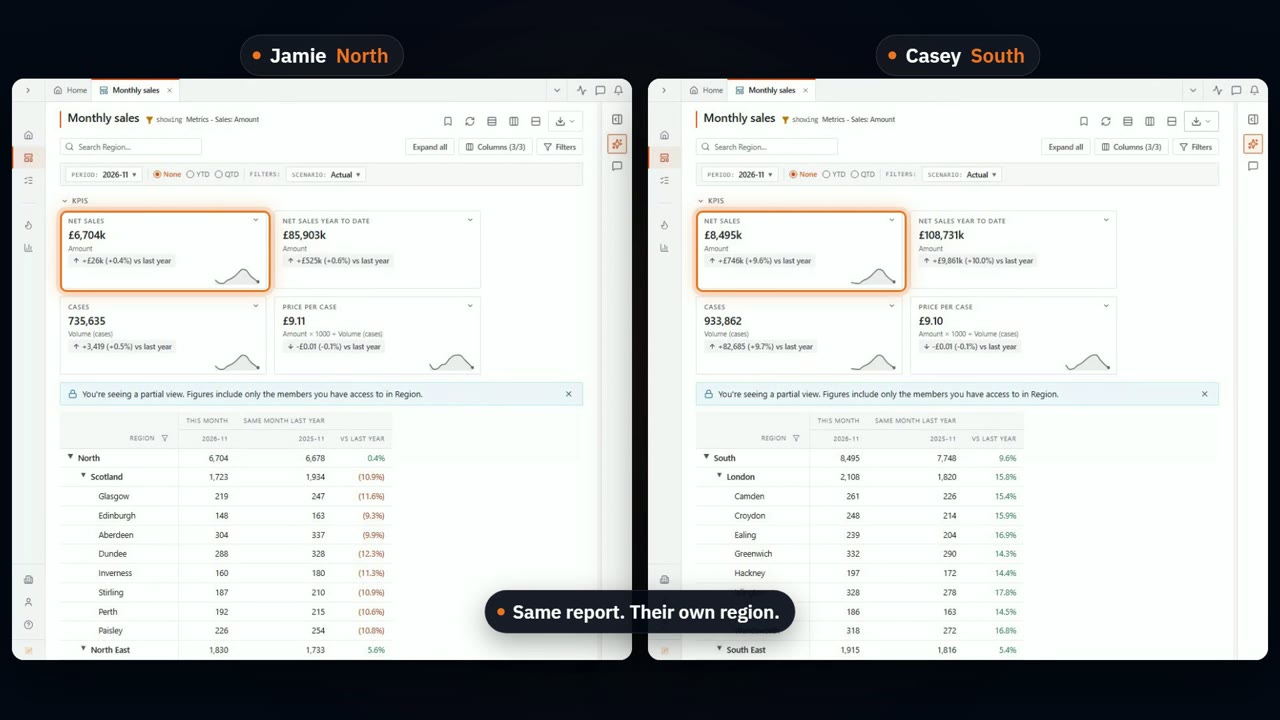
Everyone, their own numbers. One report, shared with every regional manager. Each one opens it and sees only their own region.


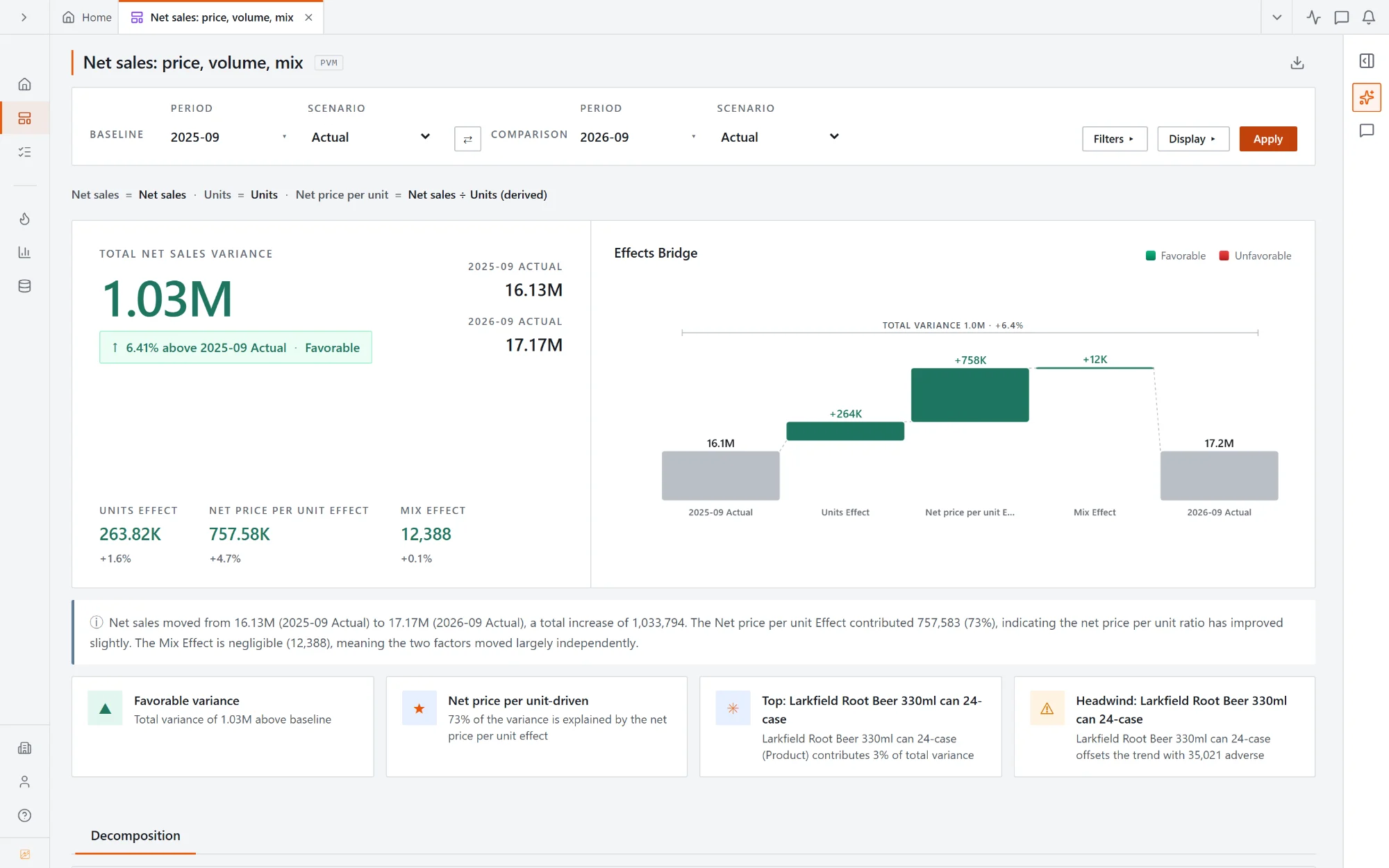
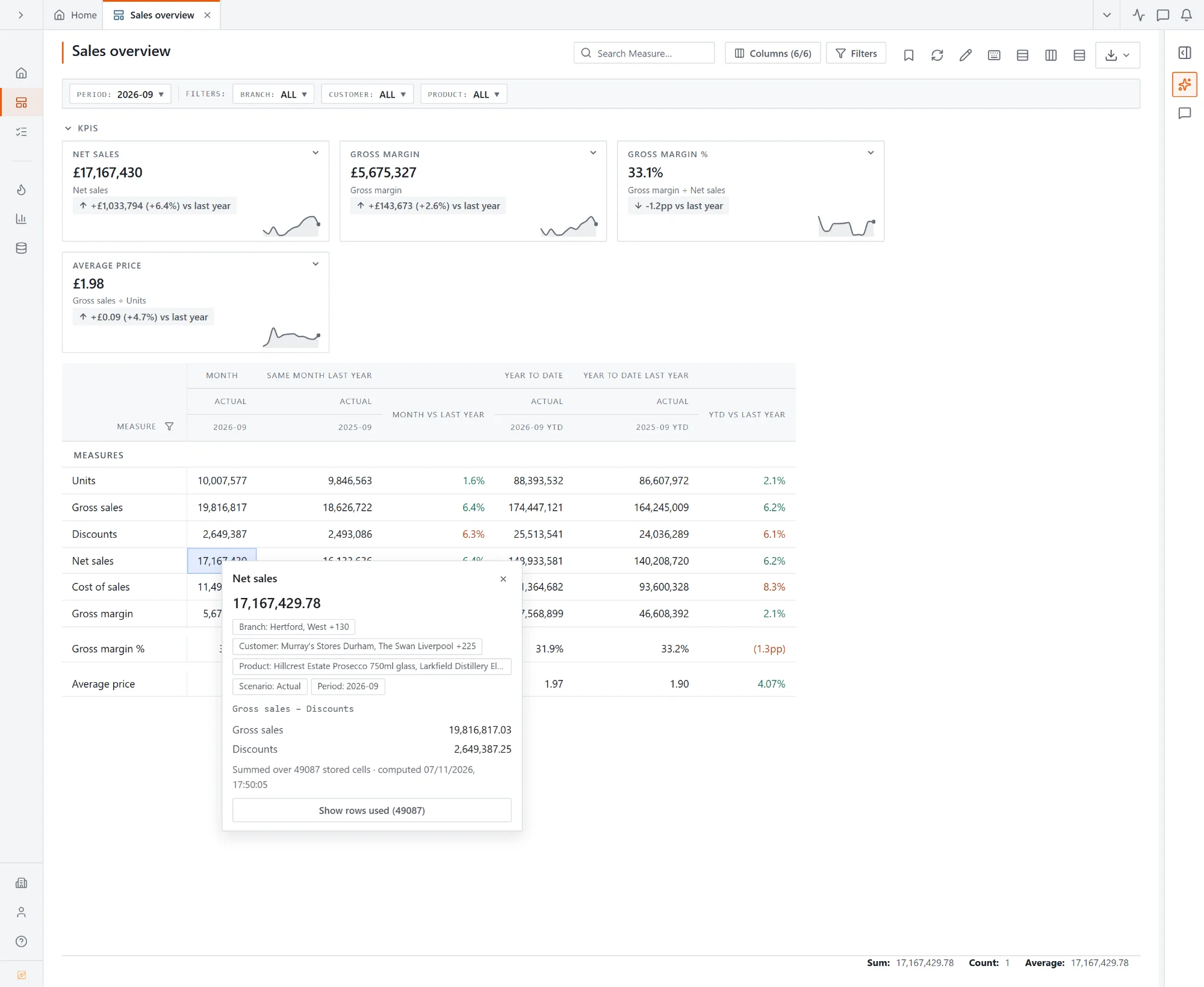
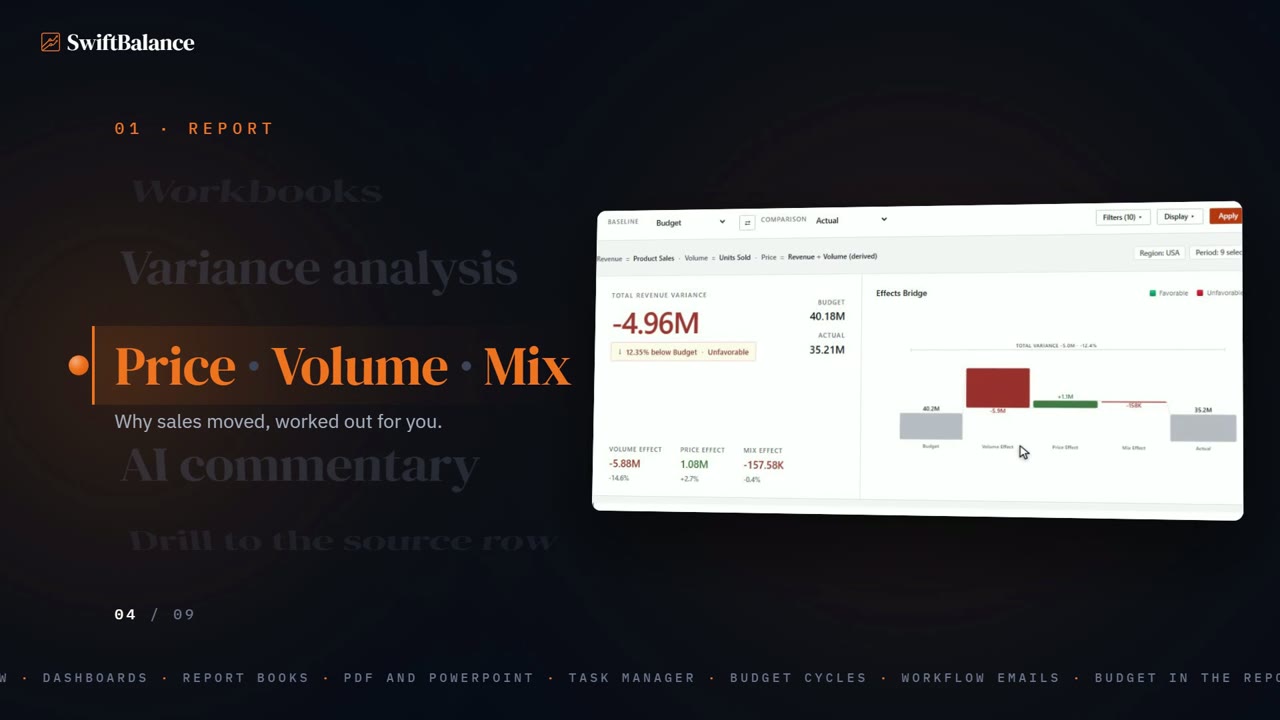
Variance bridges split a movement into price, volume and mix and write the summary for you. Right-click any calculated figure to see what it adds up, then drill to the rows behind it.
A planning model, built by the finance team in an afternoon: versions, a composed budget, spreads and forecasts, on this year's actuals.
Finance built it. A planning model that comes in parts, prebuilt.
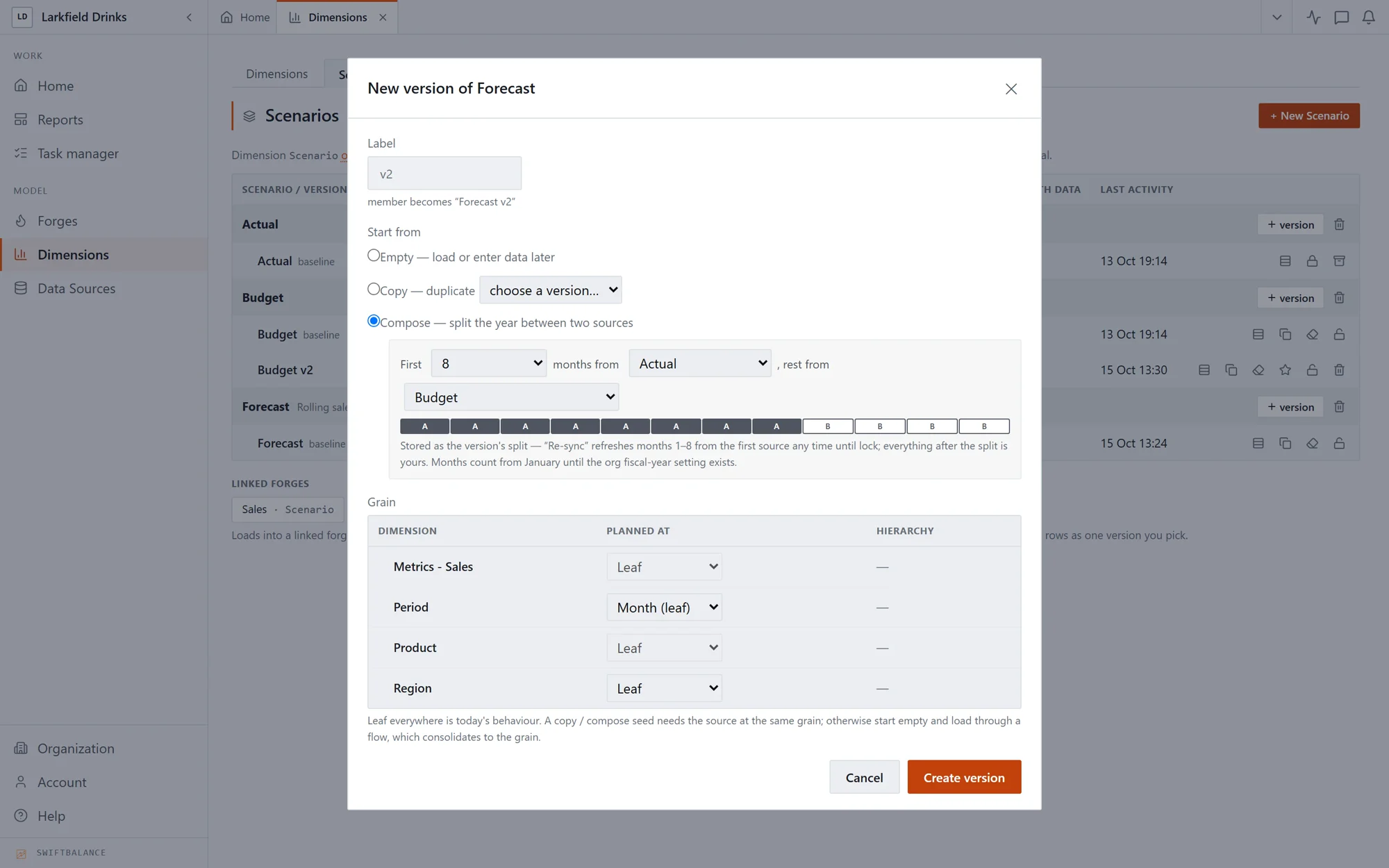
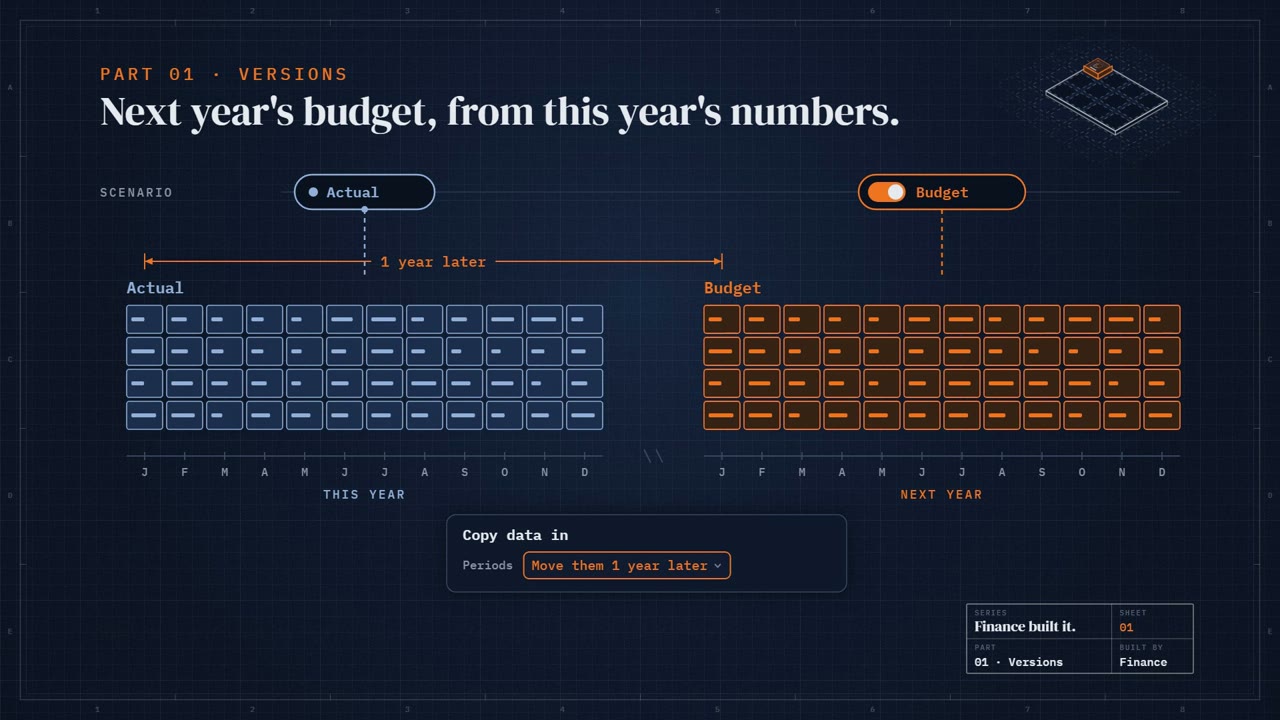
Next year's budget, from this year's numbers. Copy data into a new version, move the periods a year on, and lock what's final.
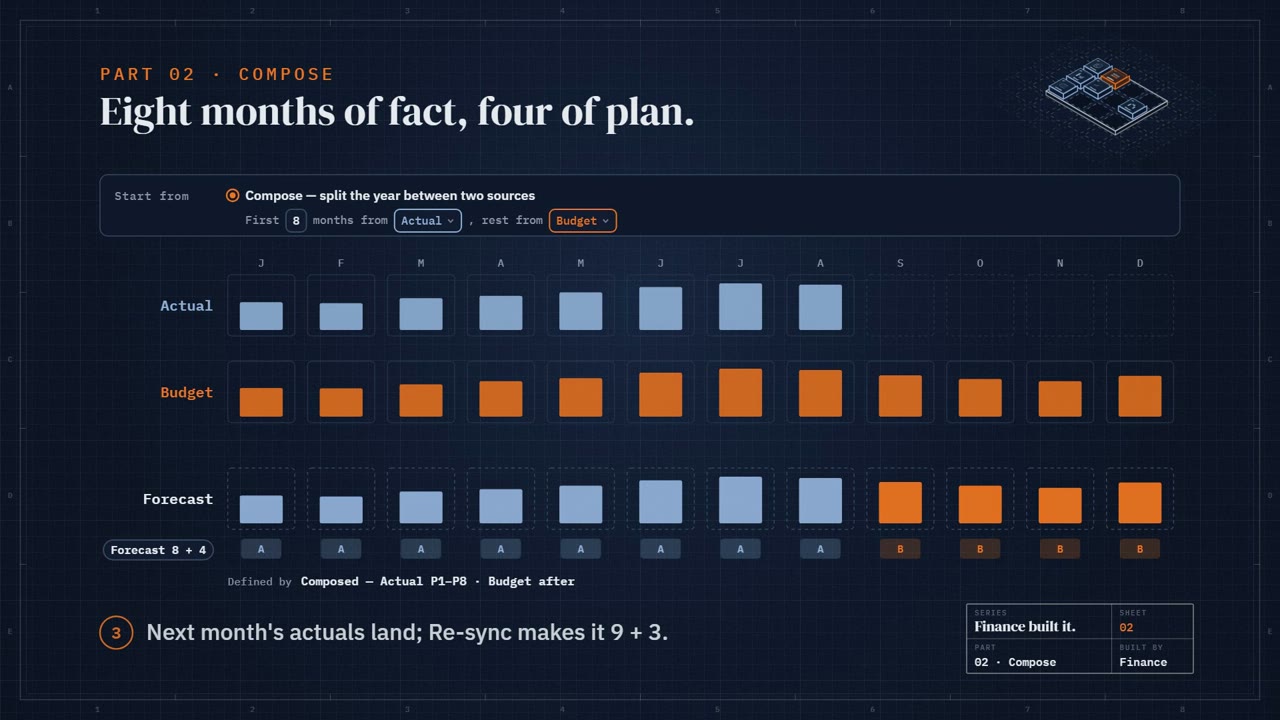
Eight months of fact, four of plan. Compose a version from two sources and split the year between them.
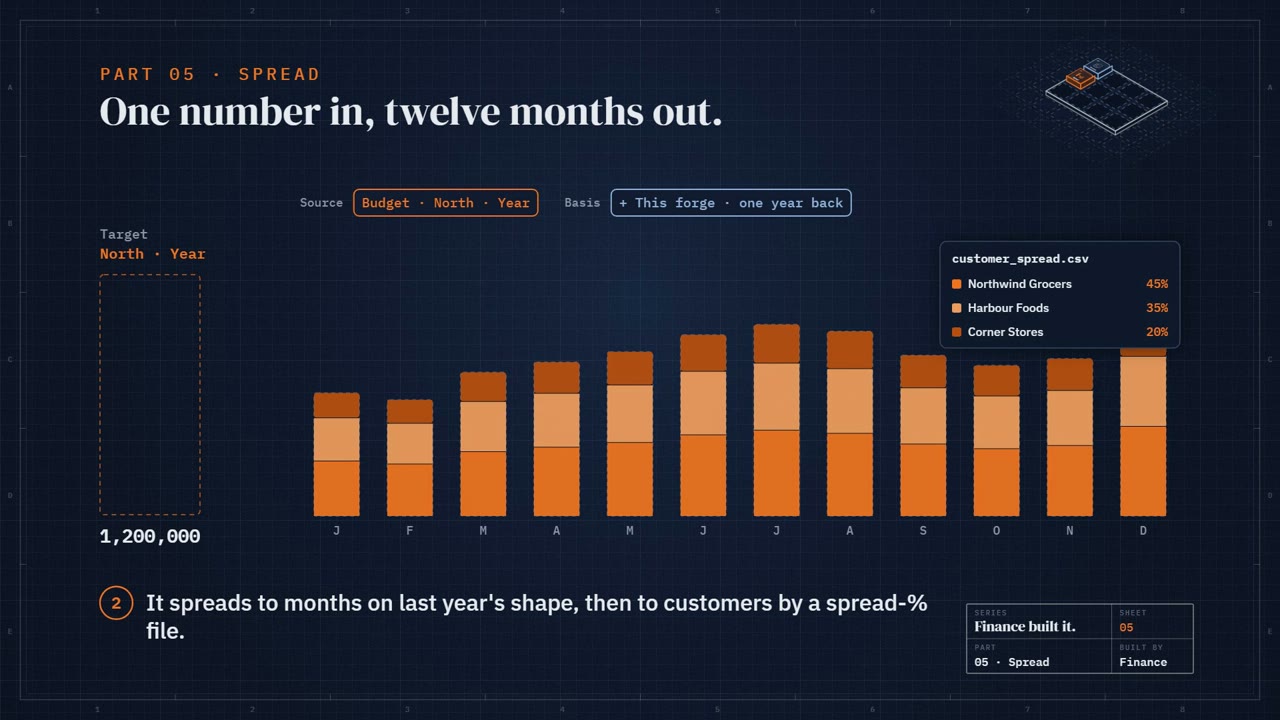
One number in, twelve months out. Spread a target across months and lines on the basis you choose.
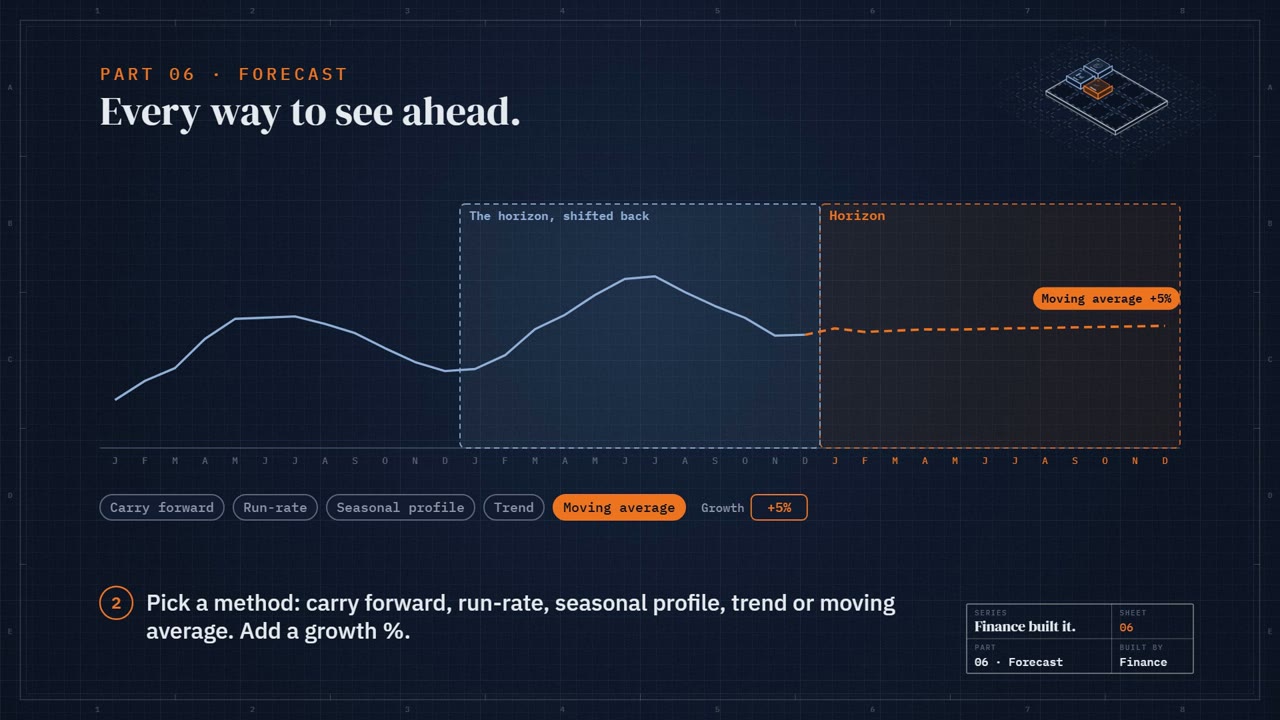
Every way to see ahead. Pick a horizon, a source and a method, and let rules choose the method line by line.
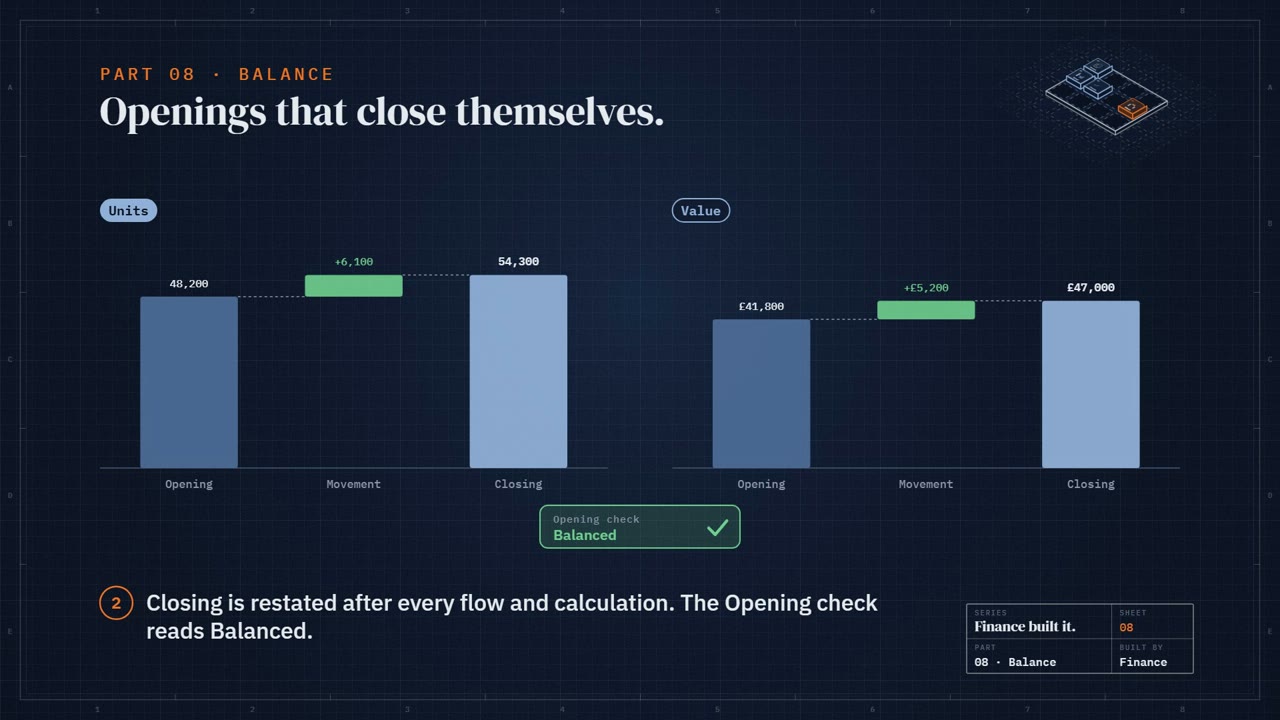
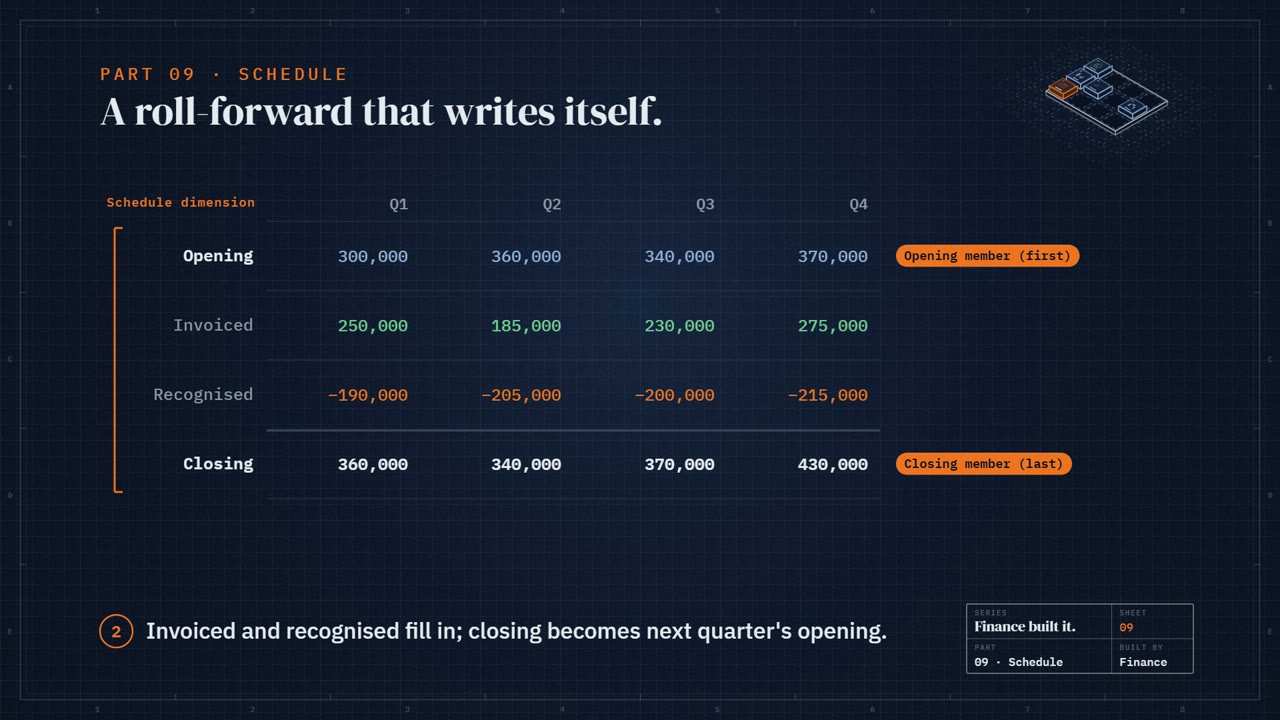
Openings that close themselves. Opening, movement and closing for every metric, carried from one month to the next.
Abigail builds the report you describe, answers questions about your numbers and explains a variance in plain words. She sees only what you are allowed to see.
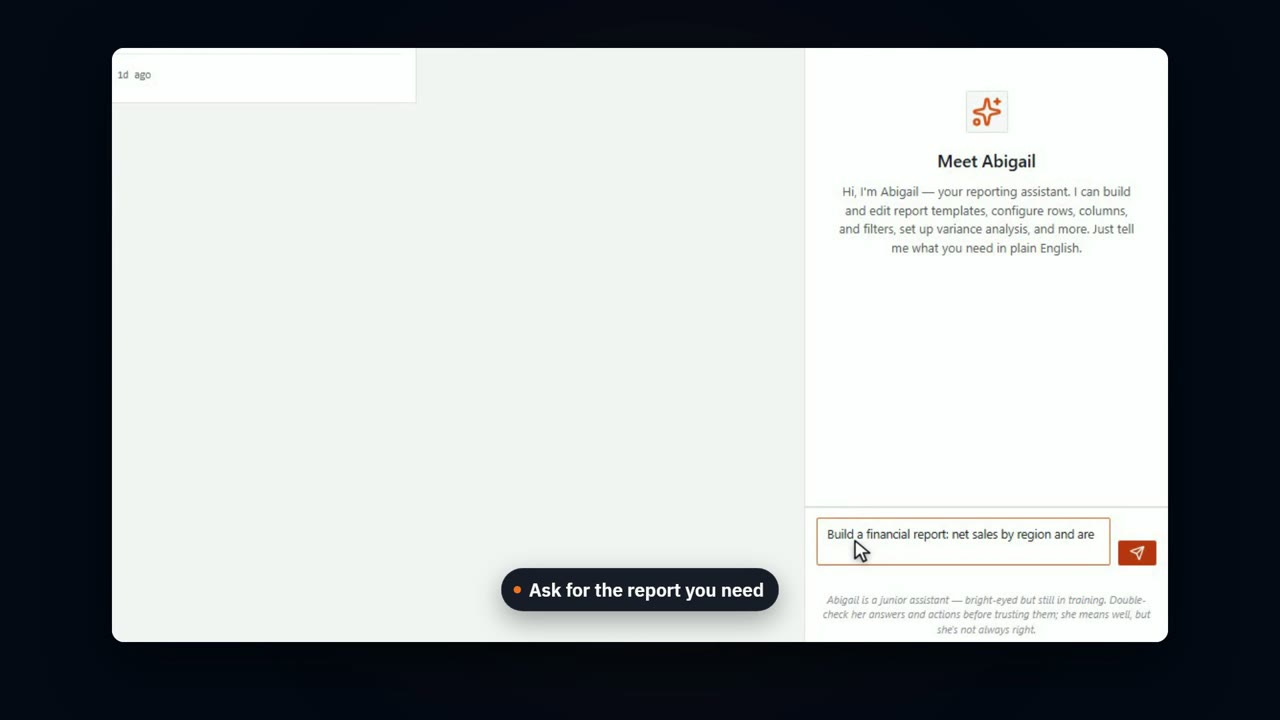
Just ask. Ask Abigail for a report in one sentence. She builds it, and it's yours to change.
Drop in the CSV or Excel exports you already have. Each one is previewed, versioned and checked before it lands.
Trim spaces, fix codes, drop the rows you don't want. The steps sit on the data source, the file stays as it was, and next month's upload is cleaned the same way.
Define your dimensions and hierarchies once. Every report and plan shares them.
Build reports, workbooks and dashboards, and explain each movement with variance.
Copy actuals into a budget version, pick a method per line and send it round for sign-off.
Two plans, each priced for a five-person finance team, and both include 50 read-only viewers. All prices exclude VAT.
Builders load data, model, and build reports, books and dashboards.
Contributors type budgets into open cells and submit them in a budget cycle. Planner includes 15.
Viewers read reports, books and dashboards. 50 included on every plan, then packs of 50.
To launch planning, ten companies get Planner at the Reporter price for their first two years. Our team sets it up with you on your own data during a free 30-day trial, so you see it working before you pay anything.
For the first ten new companies to start a trial by 31 January 2027. When the 30-day trial ends, the first year is billed annually: Planner at the Reporter price for the first two years, then at the Planner price. Within 90 days of that first payment you can cancel, and we refund the months left in the year. Setup covers loading your data and building your first reports, up to five days. Prices exclude VAT.
Book a demo and we'll walk you through a month-end and a budget round on one model.